In my previous blog, I shared some of the species of orchid you can find in Kent from April to June. Here is part two of my orchid blog, looking at some of the orchid species you can find in Kent in Summer.
Common Spotted Orchid Dactylorhiza fuchsii – June to July
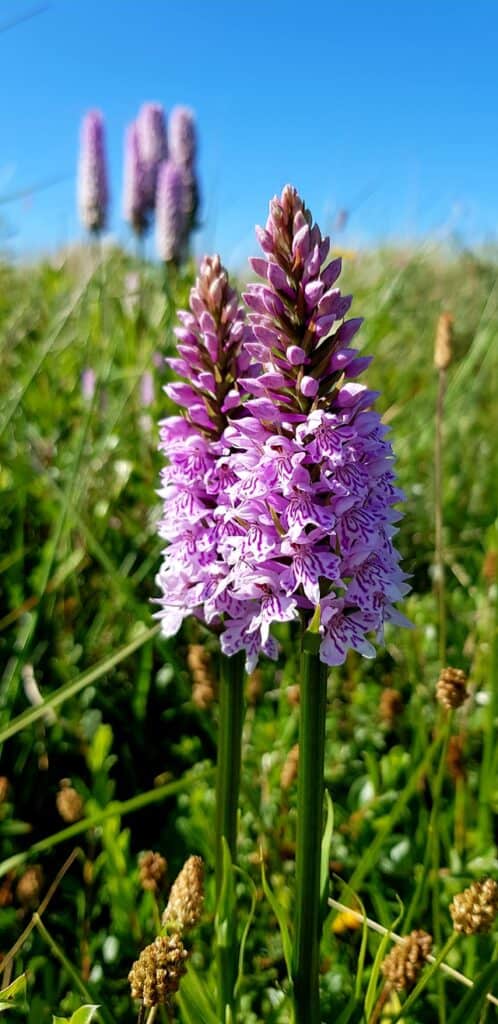
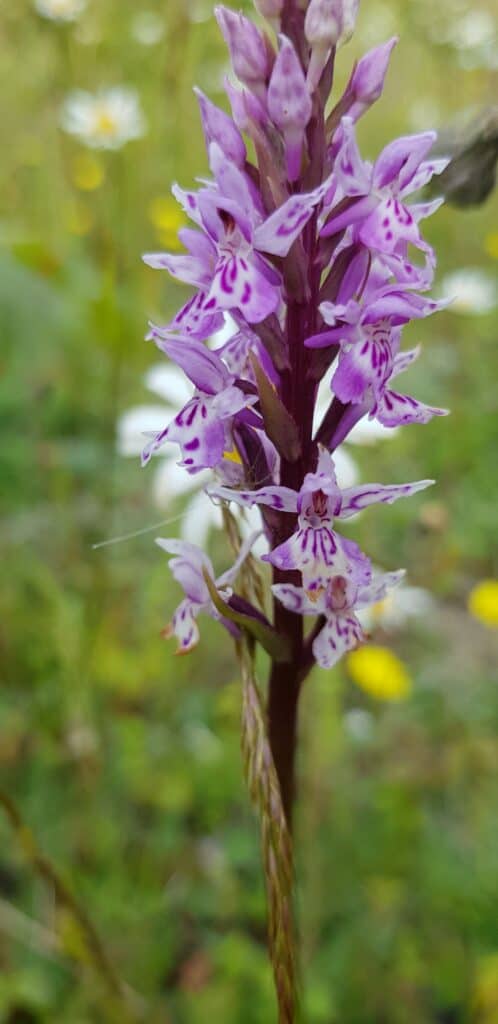
These orchids have distinctive spots on their leaves, but the flowers are very variable in colour, from a pale pink that almost looks white to deep purple. It is the UK’s most prevalent orchid, Stone Lee’s Nature Reserve (not the golf club ha) and Betteshanger Park are great areas to explore, and you’re bound to find plenty of them there. The pink spots and stripes on the flower’s lip serve as ‘nectar guides’ leading insects to a hollow spur. But alas, the insect will find no nectar there. You see, these types of orchid focus their resources on producing thousands of tiny seeds instead of energy-expensive nectar.
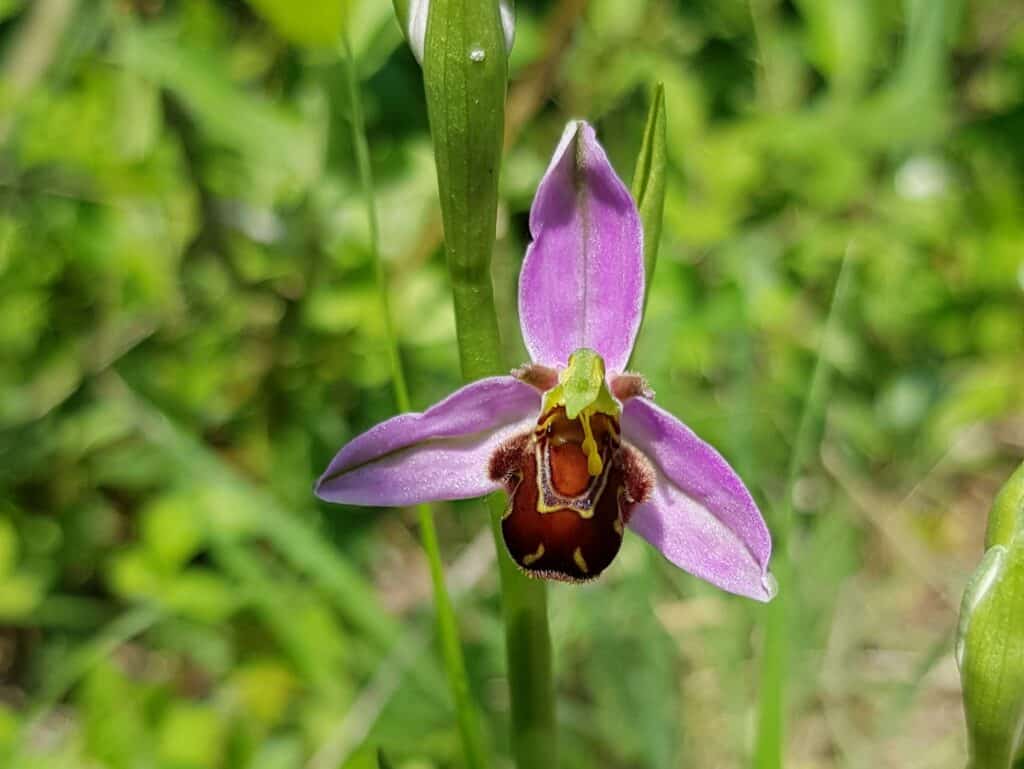
Bee Orchid Ophrys apifera – June to July
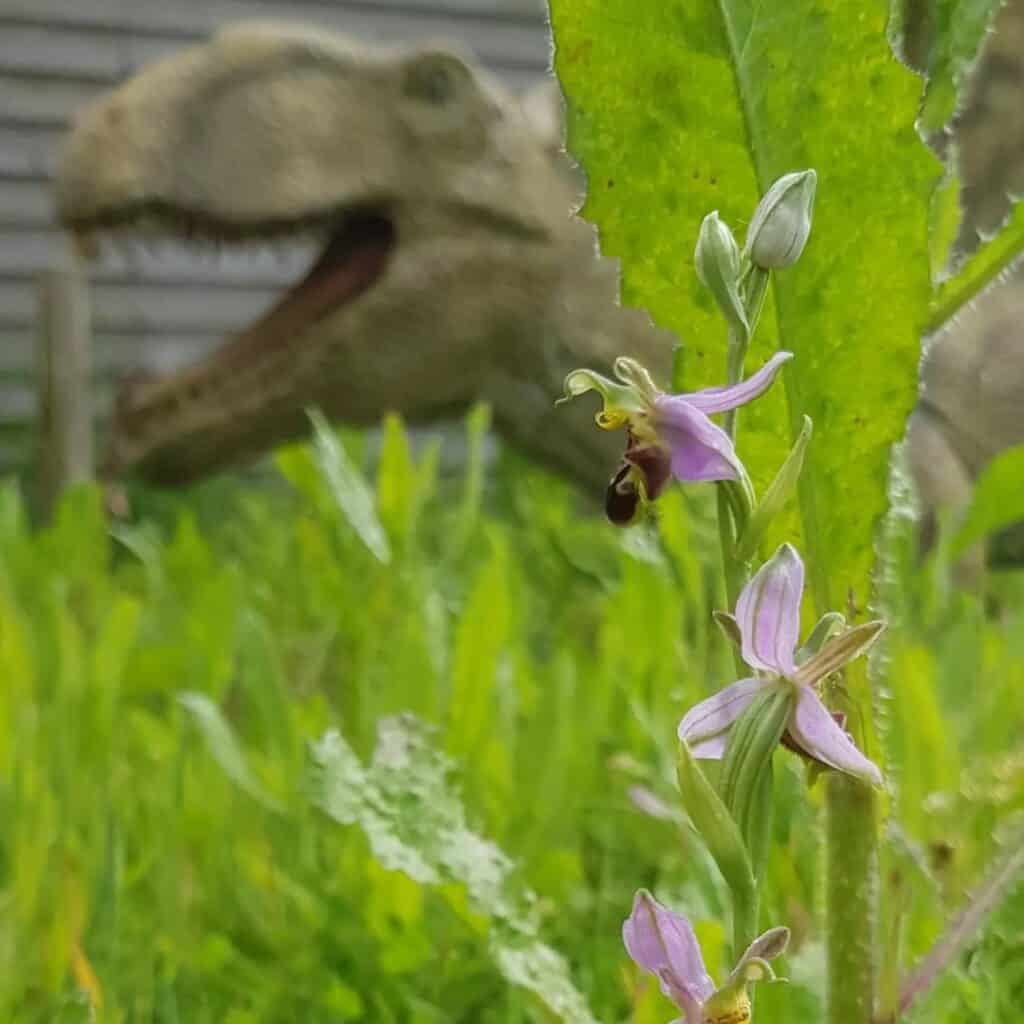
Probably the most famous mimic, and my number one favourite orchid. They are surprisingly hardy and unpredictable and often seem to just pop up on disturbed ground. We often have Bee Orchids growing around our Dinosaur exhibit right here at Wingham Wildlife Park! Interestingly, over in the Mediterranean it’s primary pollinator is the Long-horned Bee, but we don’t actually have this bee in the UK and there is no definitive historical record of it ever being here meaning our British Bee Orchids have to rely on self-pollination.
Southern Marsh Orchid Dactylorhiza praetermissa – June to July
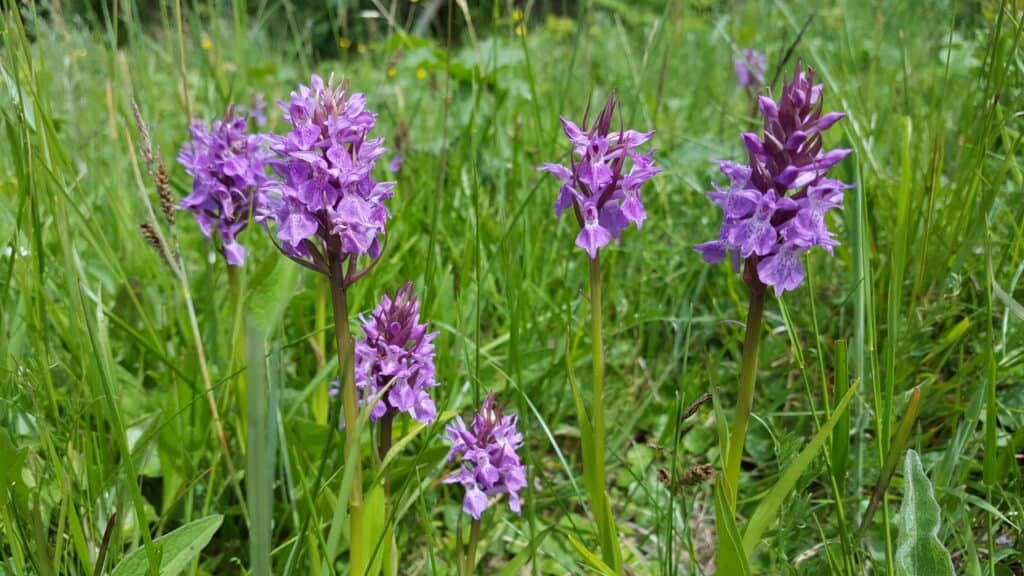
As indicated in the name, this orchid loves ‘wet feet’ and thrives in wetlands, fens and damp meadows. And you’ve guessed it, it is another nectarless orchid! This one uses insects like the cuckoo bee and butterflies like the Large Skipper to pollinate it. I visit Sandwich Bay Bird Observatory for these, but Oare Marshes near Faversham is good too, and you can sneak in some birdwatching at the same time at both of these sites!
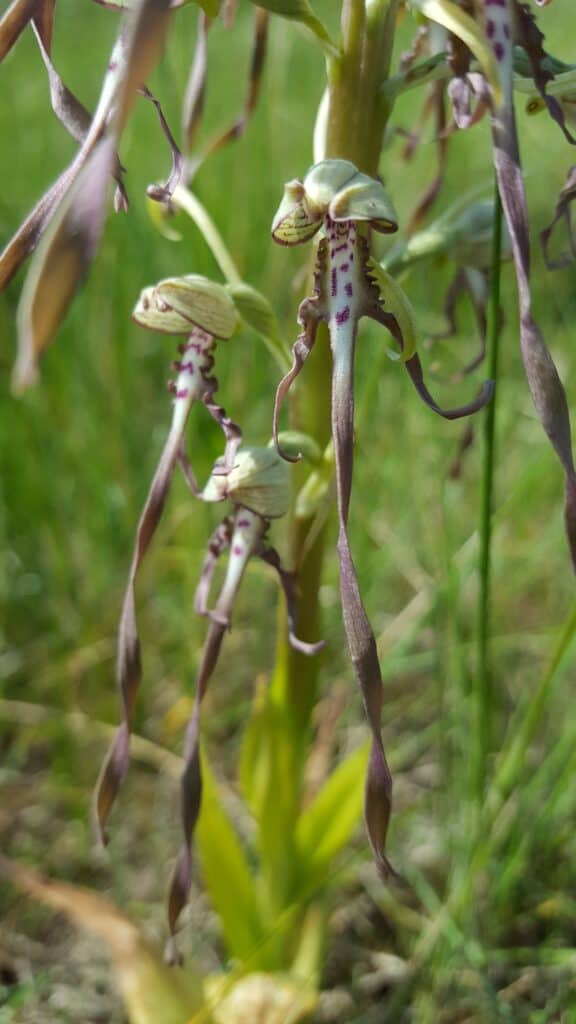
Lizard Orchid Himantoglossum hircinum – June to July
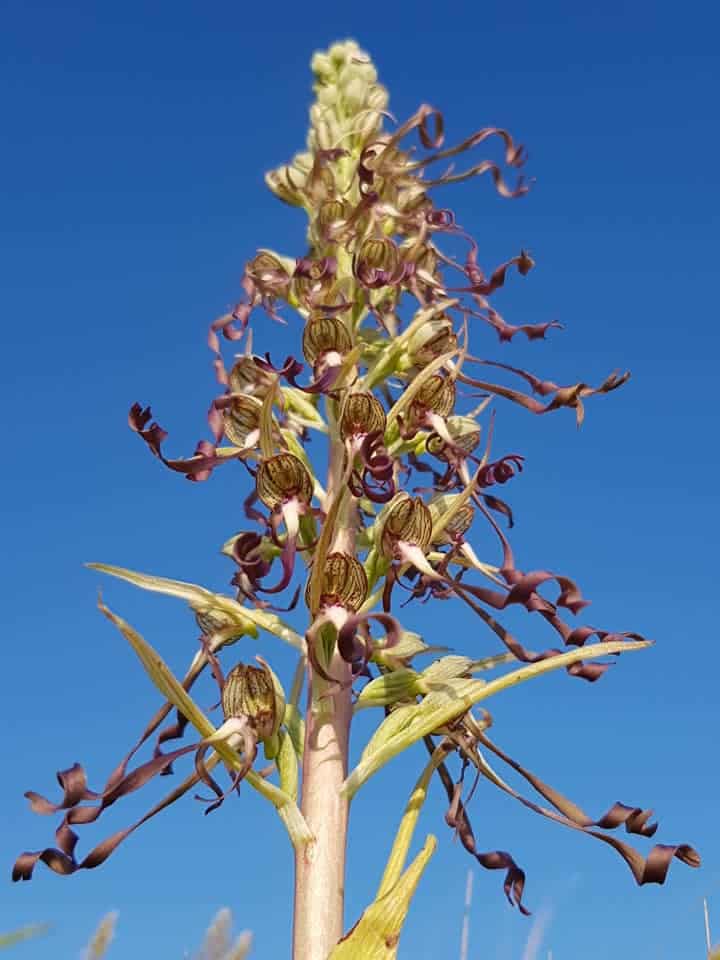
My fourth (?) favourite! Unmistakable with long and twisted petals that look like the tails of lizards! They can be found in their masses on the sand dunes of Sandwich Bay. It’s without a doubt the best place in the whole of the UK to see them, and they even grow in people’s gardens there! They are a great species to study climate change as their population in the UK fluctuates significantly depending on the weather. It is another deceiving plant, producing little to no nectar. Instead, it gives off a strong ‘goaty’ scent to entice solitary andrena bees which are their main pollinators. After working with goats for some time here at WWP I think that they smell much nicer than a goat!
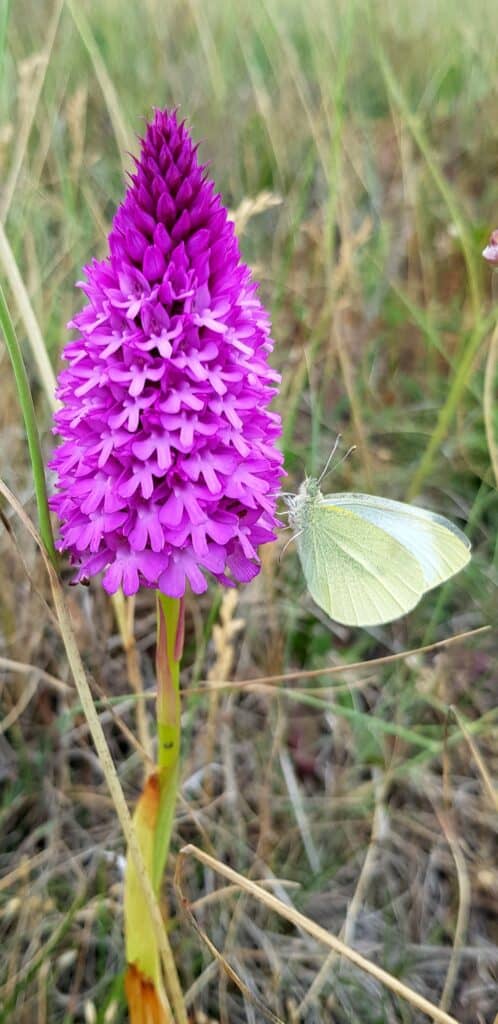
Pyramidal Orchid Anacamptis pyramidalis – June to August
My fifth favourite… although I’m not sure now as I always stop to take a photo of one of these… I must have hundreds of pictures of pyramidals! You can’t mistake the conical head of the bright pink flowers. They are all over the place, I see loads at my patch at Sandwich. I love photographing them next to the beach there amongst the bedstraws. Like many orchids, they don’t always flower every year, sometimes remaining dormant for several years until conditions are more favourable. Known for having buckets of flowers (up to 100 per spike), they are another orchid that uses a food deception strategy to attract moths and butterflies. They do this by emitting a faint sweet smell, much like vanilla, and by mimicking the appearance of other nectar-rich flowering plants that grow nearby.
Chalk Fragrant Orchid Gymnadenia conopsea – June to August
A more soft pink on these beauties and as you can guess, if you give it a whiff it has a lovely scent that smells of oranges… especially strong on a nice sunny day. You can see this one as well at Park Gate Down usually, but I have a lovely photo of the first one I found growing on top of the cliffs at St. Margaret’s. Unlike many UK orchids, this one relies heavily on nectar to attract long-tongued moths and butterflies to pollinate it. They are also a key indicator of high quality unimproved, nutrient-poor grasslands.
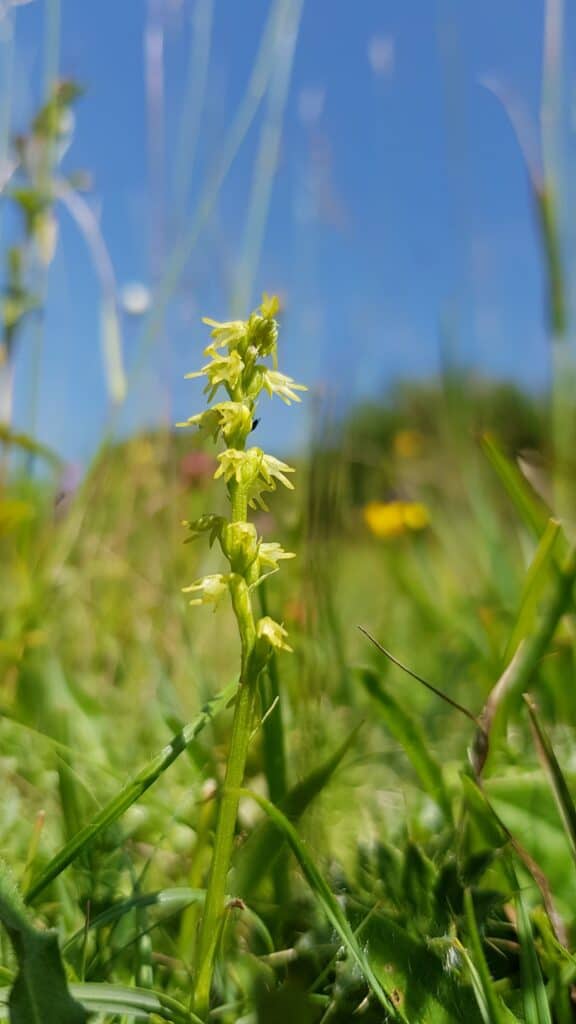
Musk Orchid Herminium monorchis – July
Probably the orchid I find most annoying to find because it is so tiny! If like me you’re struggling to find this one at Park Gate Down, look out for other botanists (especially if they’re photographing something small on the floor) and I’m sure they won’t mind pointing you in the right direction if the orchids are present that year. They really are tiny, up to just 10cm tall. I don’t really know what musk is supposed to smell like, but I thought it smelt like honey. It’s another nectar-producing species but this one’s flowers lack a spur. This makes the nectar much more exposed and accessible to a wide variety of generalist insects. Please be careful not to accidentally trample these if you are keen to find them (as with other orchids) as there are never many of them at this site.
Marsh Helleborine Epipactis palustris – July to August
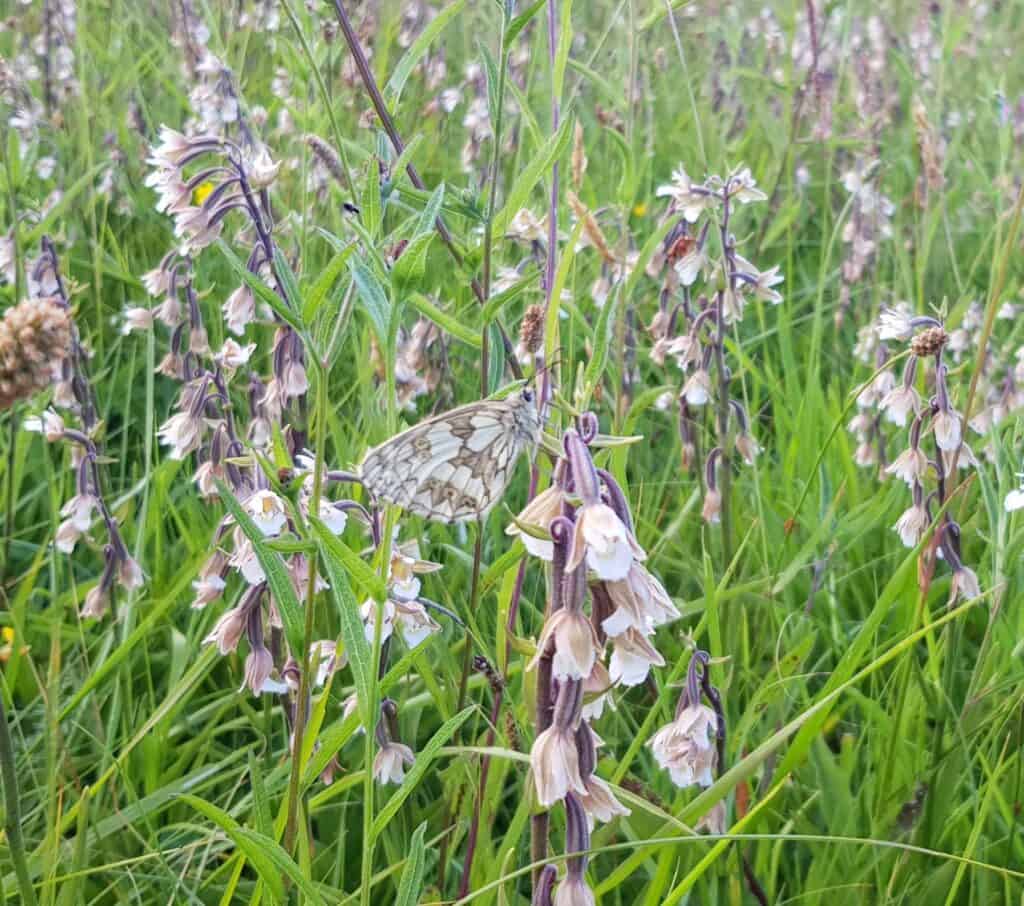
My third favourite orchid. The first time I saw a swathe of these I was entranced! Surely one of Kent’s most beautiful orchids right? They look almost like the more tropical variety we mentioned at the start of this blog. This orchid can produce nectar, but it’s still got a trick or two up its sleeve. According to The Wildlife Trusts nectar is laced with chemical cocktails which can intoxicate wasps. this makes them less likely to remove pollen properly which can potentially maximise pollen transfer. I don’t know anywhere else as reliable as Sandwich Bay Bird Observatory to see good numbers of them. Join one of the free Sunday guided walks and ask the guides about these special orchids.
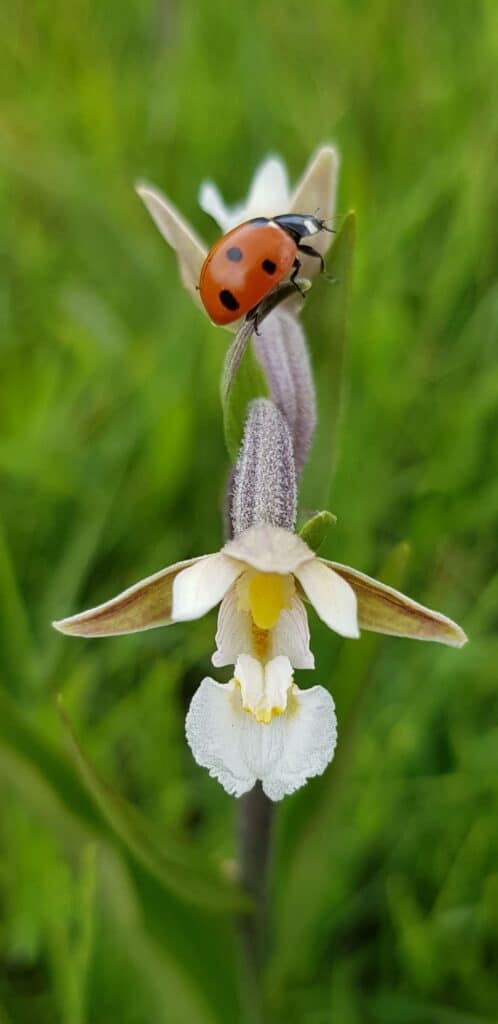
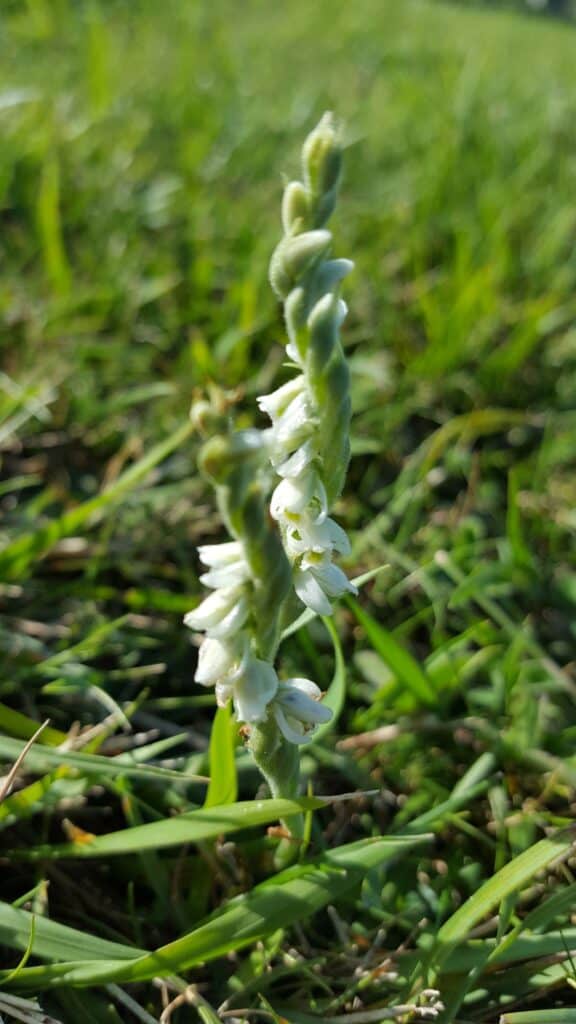
Autumn’s Lady’s-tresses Spiranthes spiralis – August to September
The finale. This is probably up there in my favourites somewhere (they’re all my favourites I think). They are just so interesting to look at. To photograph these I definitely have to get belly down on the floor to give it a good look with the hand lens. The dinky white flowers spiral up its single stem and they love short ancient turf. This one does produce nectar as a reward for the bumblebees and other bee species that pollinate it. Bumblebees typically land at the bottom of a flower spike where nectar is most abundant so this orchid has a ‘bottom up’ strategy where flowers open from the bottom of the spiral upwards. The flowers are also protandrous, meaning they function first as males (releasing pollen) and then as females (receiving pollen) which further ensures cross-pollination and avoid self-fertilisation. South Foreland is worth a visit, but the easiest place to see them is to visit the Dover Patrol Memorial (watch the pot holes if you’re driving!) as they often grow around the monument itself. I like to go to the pub at the bottom for a spot of lunch afterwards!
Phew! We made it! These are just the orchids I have managed to photograph so far out of the 25 to 30 species to be found in Kent. So, if you now have the orchid bug too, the next time you are marvelling at one, remember that these wonderful flowers aren’t just found in the tropics. They are here, right under our noses in the Garden of England too!
Could you have Orchids in your Garden?
You only have to have eyes on the ground occasionally to be in with a chance of spotting a wild orchid on a walk in Kent. But to find one in the garden is my dream! I was so excited when Head of Reptiles, Hannah, found the Bee Orchids growing here at the Park. I’m keeping my fingers crossed for them growing up in my garden!
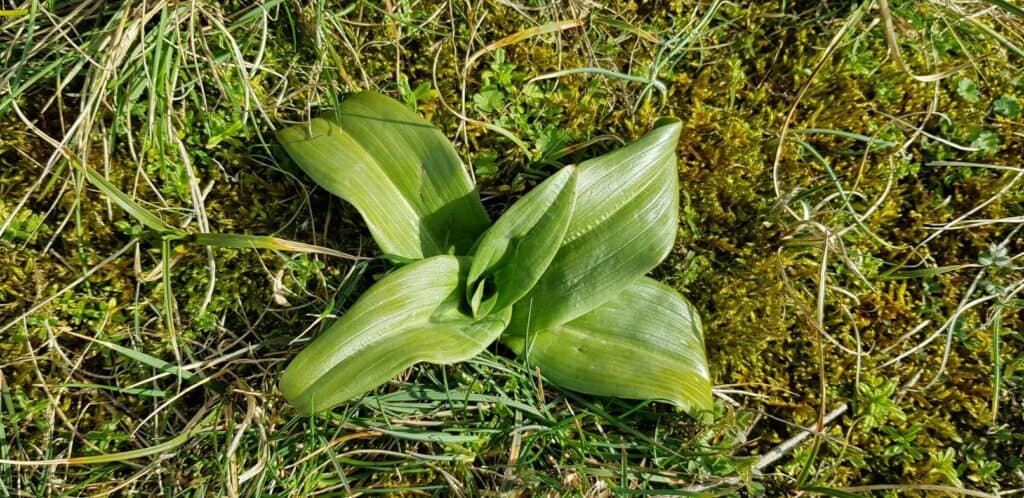
If you’re lucky enough to already have spotted a Bee Orchid or Common-spotted Orchid (or other species of orchid) on your turf, here’s a few tips on how to help them thrive:
1) Skip the mow! If you see a rosette of leaves or a flower spike, mow around it! Or better yet, cut the lawn just twice a year, in August/September and again in February, keeping the mower high at 5-10cm. Orchids grow usually from April to August, so best not to mow during this period if you’d like a meadow of orchids to flourish. It’s also important to collect the cuttings as orchids prefer nutrient-poor soils.
2) Skip the chemicals! Orchids have a special relationship with underground fungi (mycorrhizae) and many rely on them to germinate and to help them absorb minerals. High-nitrogen fertilisers, weedkillers and pesticides can kill off the fungi, essentially starving the orchids.
3) Resist the urge to move them! They rely so heavily on their specific patch’s fungal network that they rarely survive a transplant.
4) Enjoy the ‘no mow’ look! A wilder patch of lawn doesn’t just benefit orchids! It will attract a plethora of pollinators and other wildlife into your garden. See my blog on ‘no mow may’ HERE to see what flowers you might start to see if you wanted to take part next month.
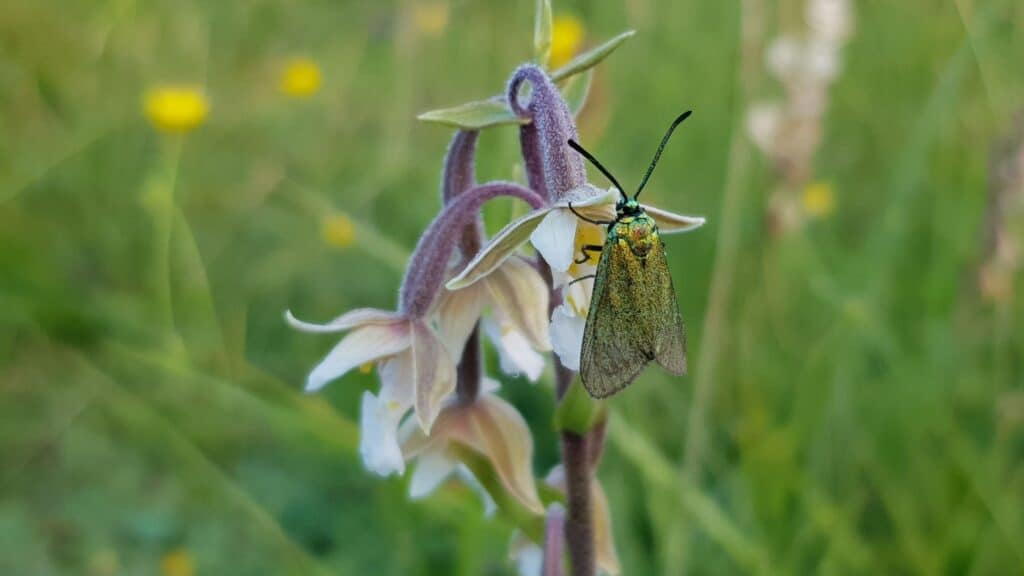
I’ll leave you with a photo of one of my favourite moths, the Forester, on a Marsh Helleborine at Sandwich Bay Bird Observatory: