I love an orchid I do. Growing up, mum always had orchids growing in pots about the place, with their roots all spilling out over the sides. She bought me one last year and it really does make me smile every day! My Moth Orchid (Phalaenopsis spp.), the ones that we see lining our supermarket shelves, are easy to care for and brighten up any windowsill. I love to research my house plants to see where they live in the wild, as you do, so it was really cool to find out that it was an epiphyte (a non-parasitic plant that grows upon another plant… typically a tree). These ornamental orchids are also native to tropical Asia and are imported all over the world, what a feat of global logistics and high-tech horticulture.
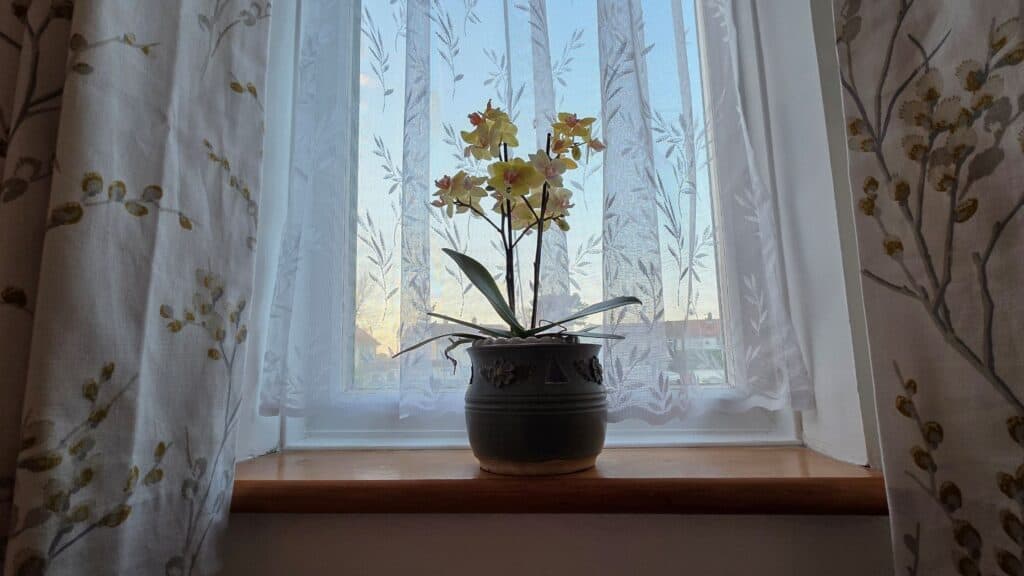
Fun fact… did you know that many supermarket orchids start off life in a sterile laboratory? Cloning is the secret to how we can buy a perfect, flowering orchid all year round, by turning one ‘mother’ plant into thousands of genetically identical ‘plug’ plants that all grow at exactly the same rate. While efficient, this global trade has a significant carbon footprint! Don’t get me wrong, I love decorating my home with plants… I actually think I have a bit of a problem, because whenever I see plants for sale, I can’t help myself! I usually buy the one that looks a bit sickly, but my plant rescue attempts might be better off saved for a future blog, because I’d really like to focus on some of the orchids that we can see right here on our doorsteps!
Orchids of Kent
Kent is known as ‘the Garden of England’ for a reason! We live in one of the best places in the whole of Britain to see native orchids. Forget the plastic pots for now, these flowers thrive in our ancient woodlands, coastal nature reserves and they absolutely love our county’s extensive chalk downlands! Around 25 of the UK’s 52 odd orchid species can be found in Kent! Kent’s geology, particularly our nutrient-poor chalky grasslands, create the perfect environment for these fascinating plants. So, if you’re ready to swap the supermarket aisles for a walk in the countryside, here’s my guide to some of Kent’s wild orchids and where to find them.
Now, before we get stuck into it, it’s worth noting that looking for orchids is a delicate business. when looking for orchids, please stick to the designated paths to avoid trampling and NEVER pick or collect wild orchids as it can damage their fragile ecosystems. Not only is it illegal to dig up any wild plant without the landowner’s permission, some orchids are so rare that it is illegal to pick, uproot or even touch them at all! That being said, discovering these beautiful plants is always so exciting, we just need to be mindful of where we put our feet!
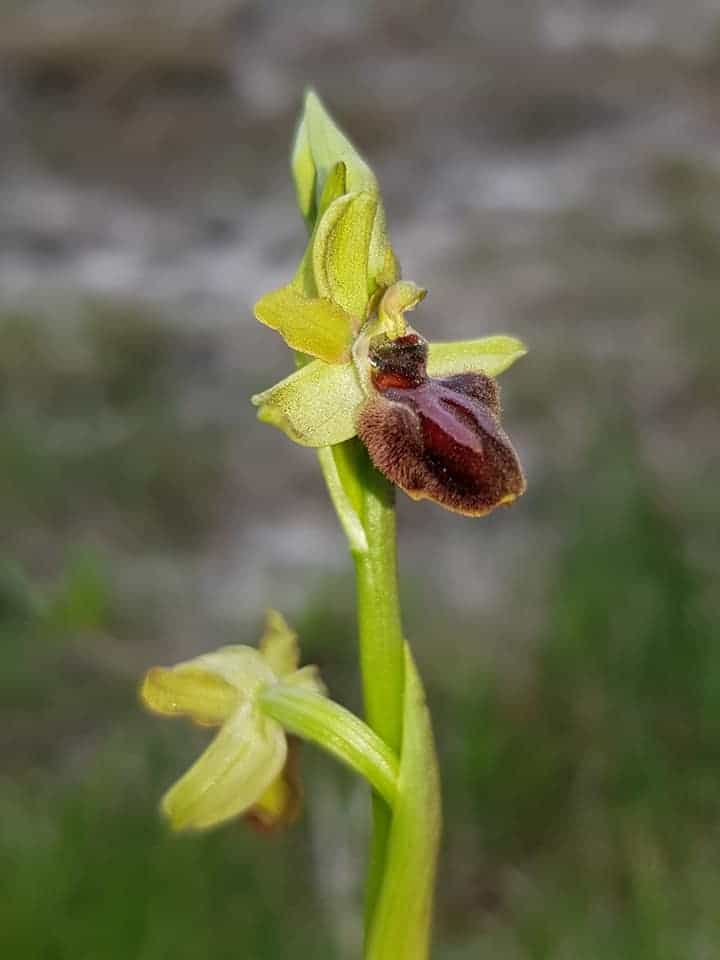
Early Spider Orchid Ophrys sphegodes – April to May
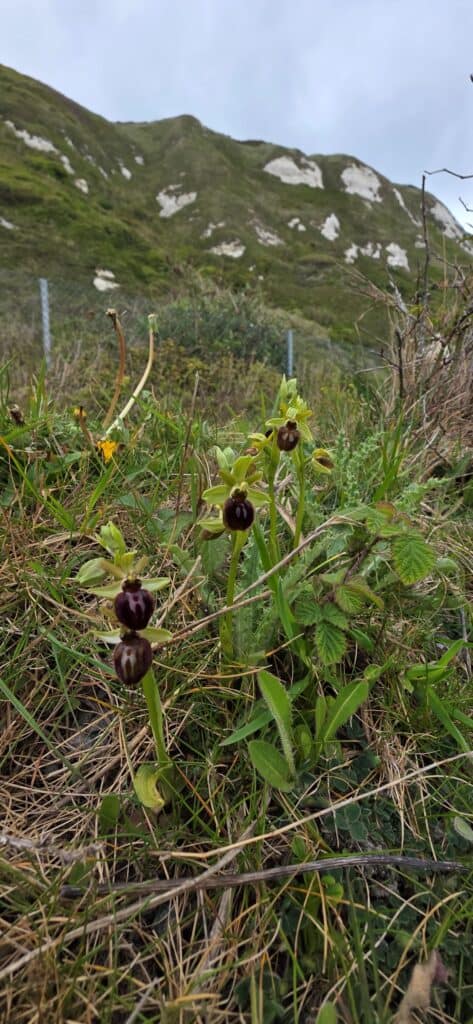
The season kicks off now in April, but late May to late June is the best time to go on an orchid adventure. Last week I wanted to tick off a crucial early starter in Kent! The chalk cliffs of Samphire Hoe near Dover are world-famous for these little mimics. This orchid looks like a female bee to trick males into pollinating it! Whilst we still have the solitary bee (Andrena nigroaenea) here in Kent, climate change has caused the female bees to emerge before the orchids flower. While the early spider orchids still rely on this bee, the orchid is now having to rely more on self pollination which is leading to a shrinking range. Look for them just next to the car park by the railway line on your way back if you’re walking the loop.
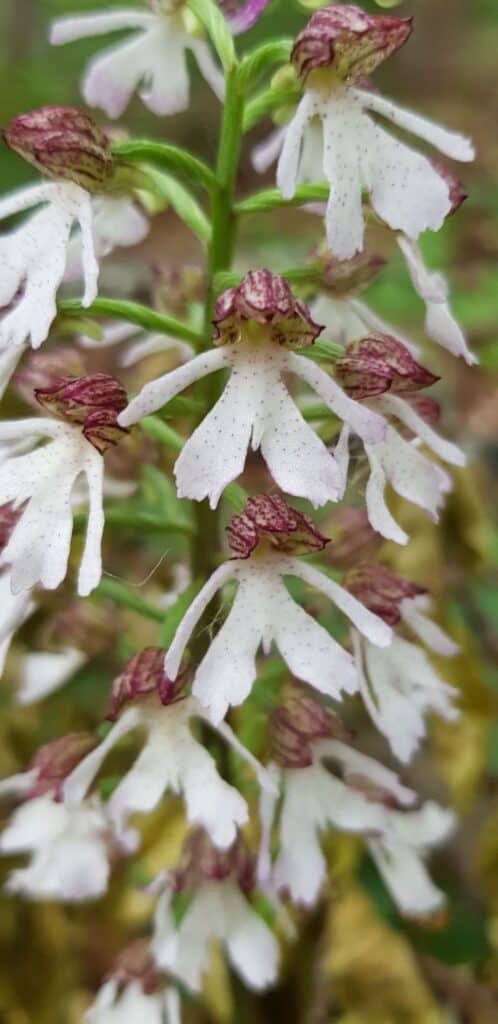
Lady Orchid Orchis purpurea – May to June
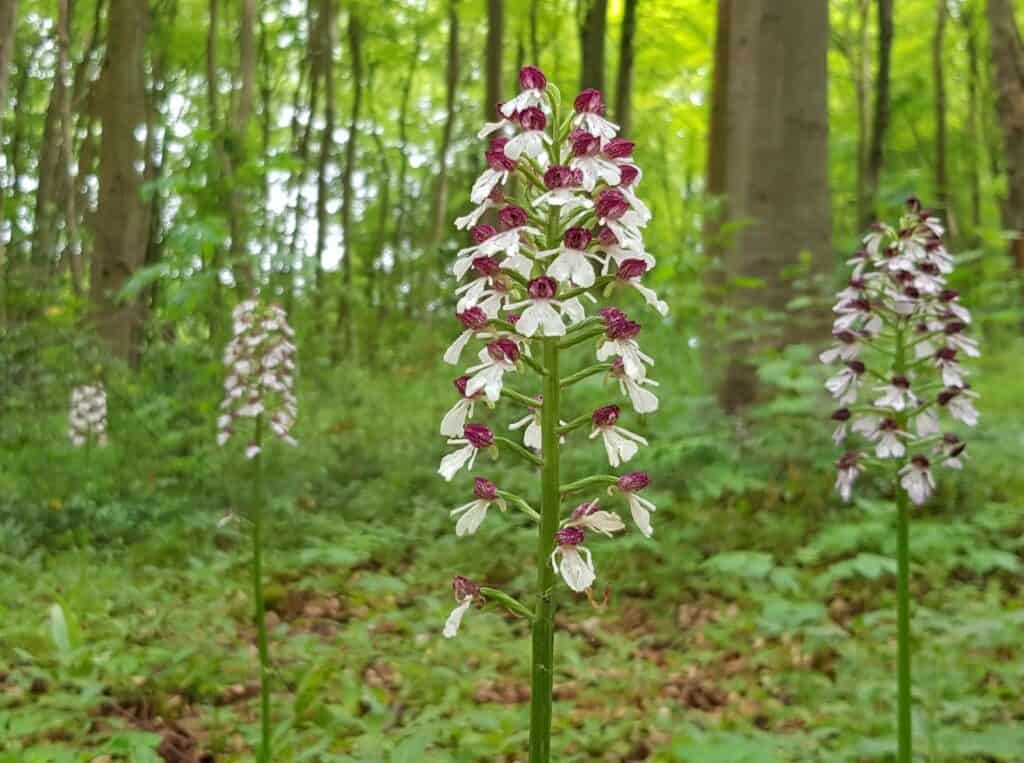
A Kent Speciality! Our county is one of the few places in the UK where this orchid truly flourishes. Their flowers look like women wearing a big old-fashioned fancy dress and a matching bonnet. The sweetly scented flowers trick small bees and flies into visiting, yet these flowers offer no nectar! Because there is no reward, pollinators eventually learn to avoid the flowers, but luckily the orchid can rely on constant new visitors to dupe. Bonsai Bank is a great place for them.
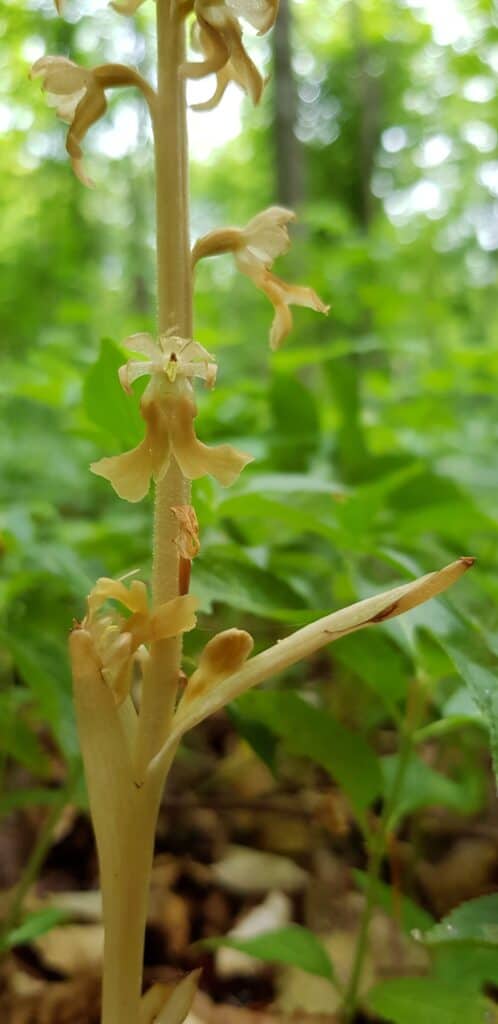
Birds-nest Orchid Neottia nidus-avis – May to June
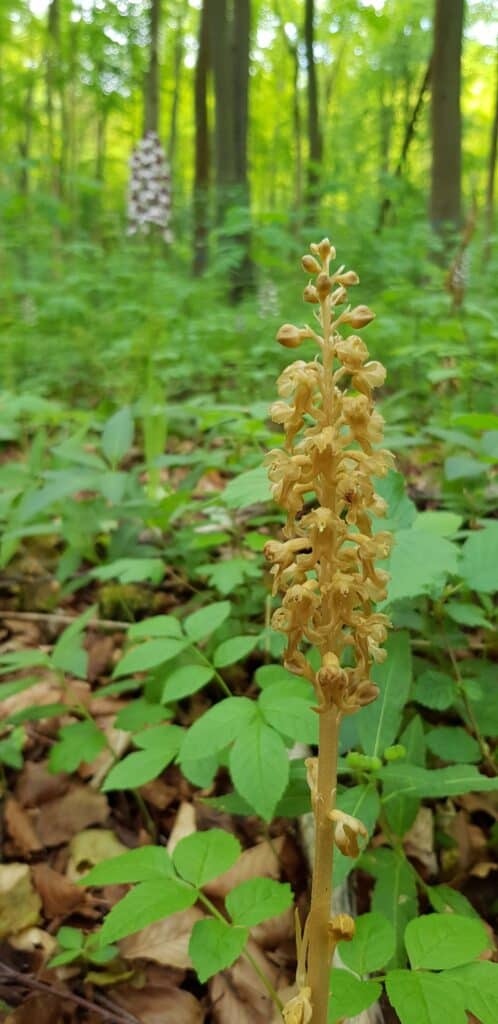
This is such a distinctive orchid! They are non-photosynthetic and love some of our shady woods across Kent, particularly beech woodland on chalky soils. Lacking chlorophyll, they rely on fungi for nutrients and they are relatively generalist when it comes to pollination. This is another orchid that produces little to no nectar, so it is thought that the flowers encourage small insects such as flies and beetles via subtle scent cues and their clustered flower structure. I found these ones growing at Covet Woods growing amongst Lady Orchids.
Monkey Orchid Orchis simia – May to June
My second favourite orchid and a true rarity! Their flowers, as the name suggests, look like monkeys apparently… with a long… tail. Another orchid that doesn’t produce nectar but attracts pollinators like bees and other flying insects with a faint scent. Despite this, natural pollination rates are often low. Many of the Monkey Orchids in Kent have historically been reliant on hand-pollination by conservationists to bolster the population of this vulnerable species. They are known to hybridise with Lady Orchids and Man Orchids if they grow in close proximity. Visit Park Gate Down in June near Elham for a great day out!
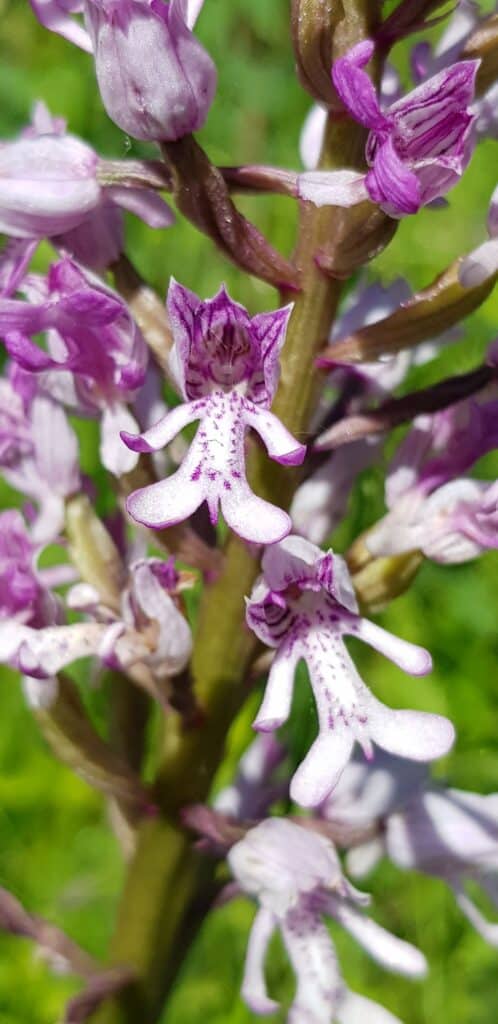
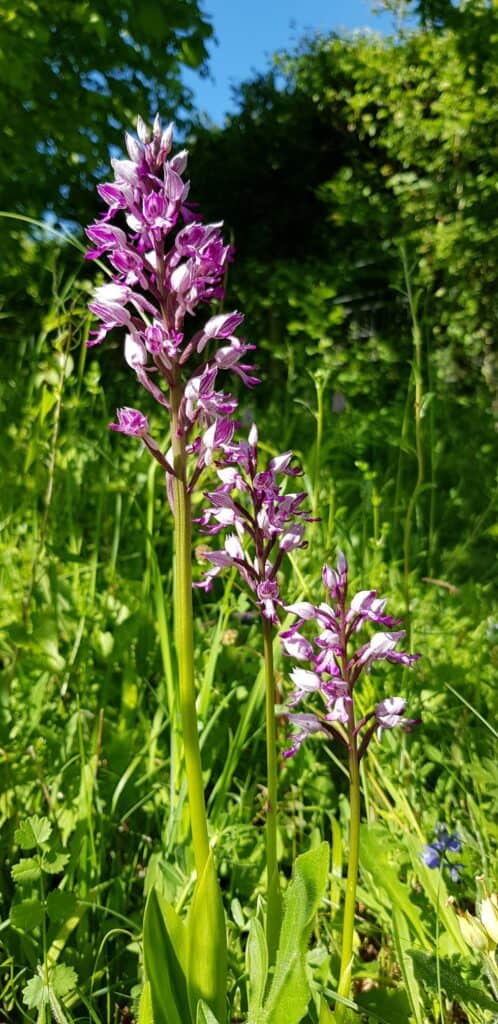
Man Orchid Orchis anthropophora – May to June
The Monkey Orchid’s little brother. Less colourful, but the flowers of this orchid resemble tiny, hooded men. This orchid is a generalist when it comes to pollination and offers a genuine food reward to a variety of small insects. Bonsai Bank again can be good for them.
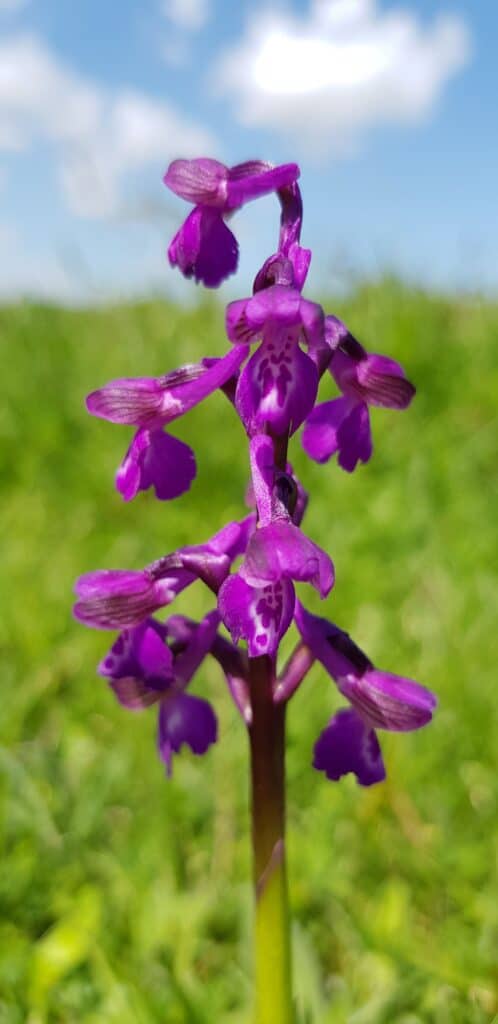
Green-winged Orchid Anacamptis morio – May to June
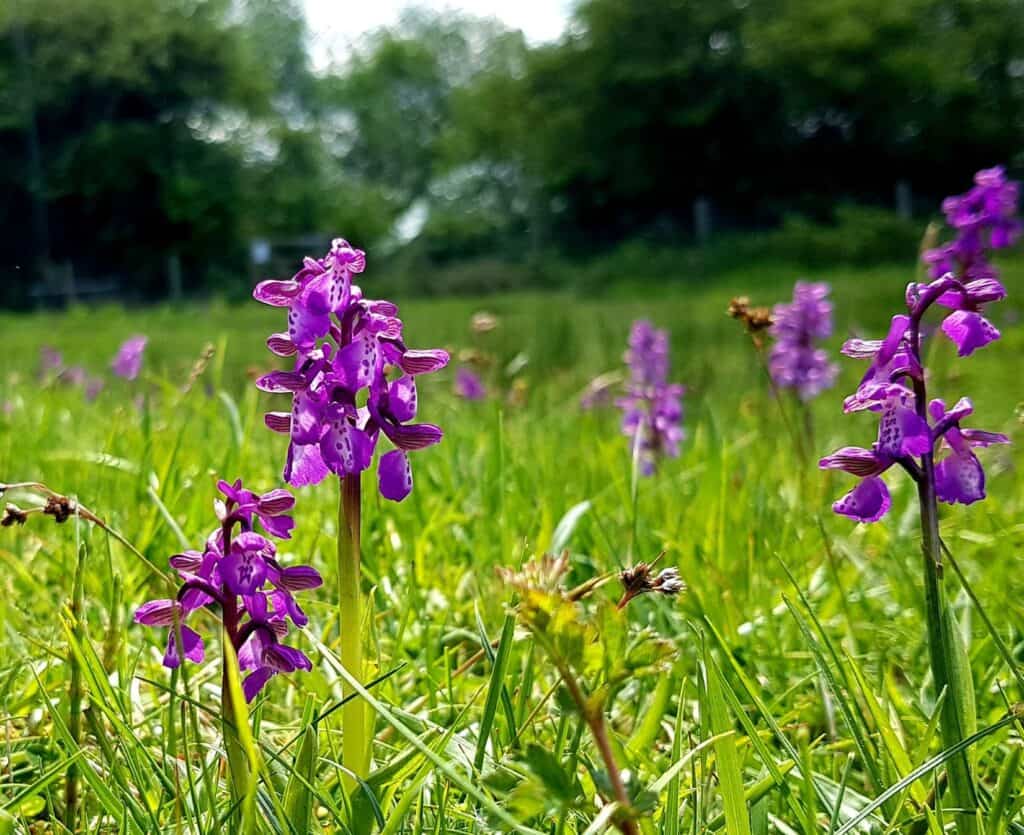
Often confused with the Early Purple Orchid, look for the green veins on the petals of the hood to ID this one. I go to see them at Sandwich Bay, but apparently Marden Meadow is a good spot for them which has been on my list to visit for a while now! Another species that does not produce a food reward but tricks pollinators like bumblebees into moving pollen between flowers.
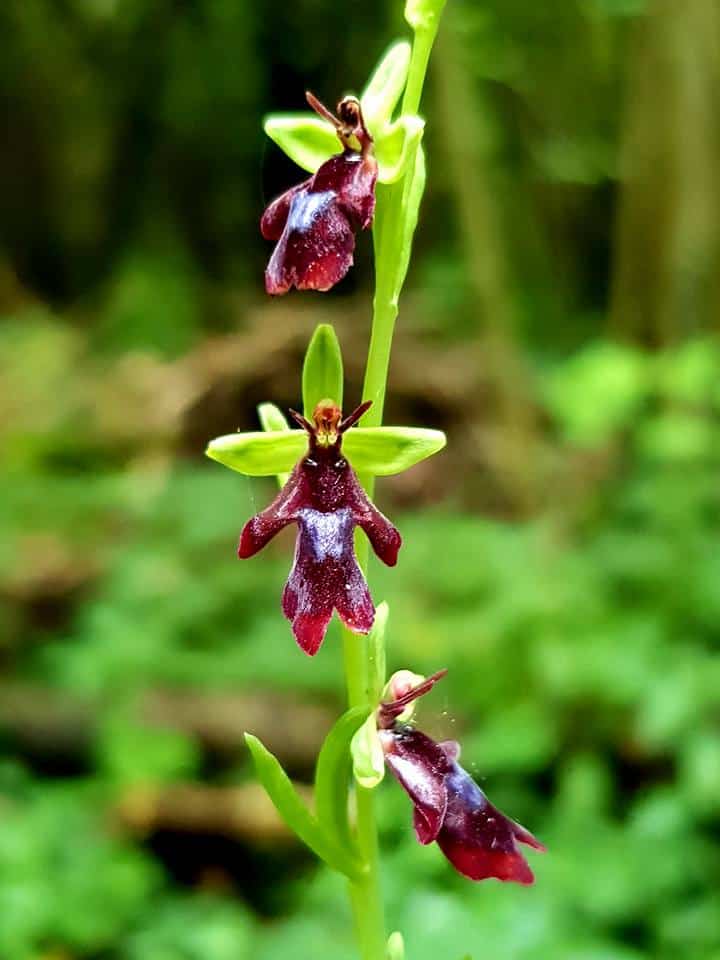
Fly Orchid Ophrys insectifera – May to June
One of the best mimics as its velvety, metallic flowers look exactly like small flies resting on their stems. Yockletts Meadow is a great place for these, but I find them very tricky to photograph… they always look so much better in real life! Its ecology is fascinating because this orchid can actually release pheromones that mimic female digger wasps to trick the male wasps into pollinating them when they try to mate with the flowers.
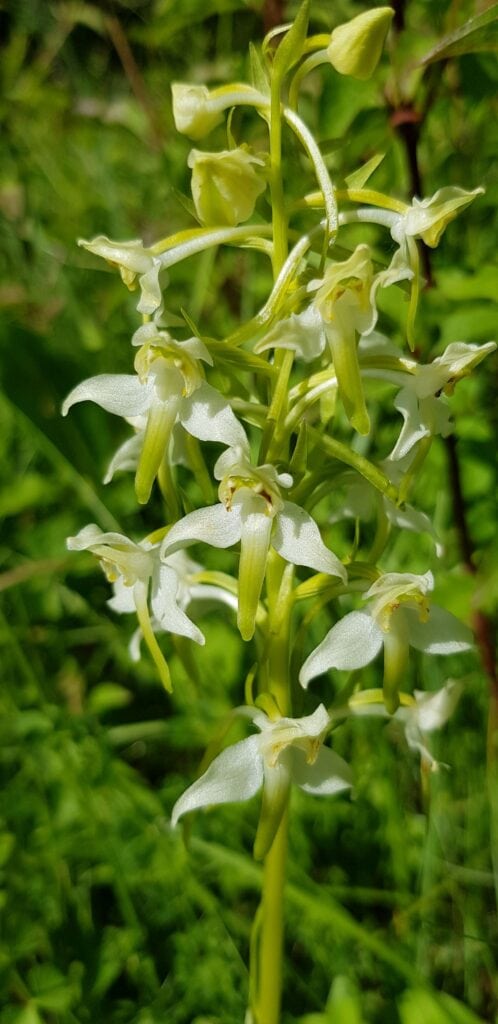
Greater Butterfly Orchid Platanthera chlorantha – May to June
You’ll likely see this gorgeous orchid if you take a trip to see the orchids at Park Gate Down. The flowers emit a sweet smell at night and are pollinated by moths which feed on nectar located deep within the flower’s spur. The pollen attaches to the moth’s eyes, ensuring high pollination efficiency.
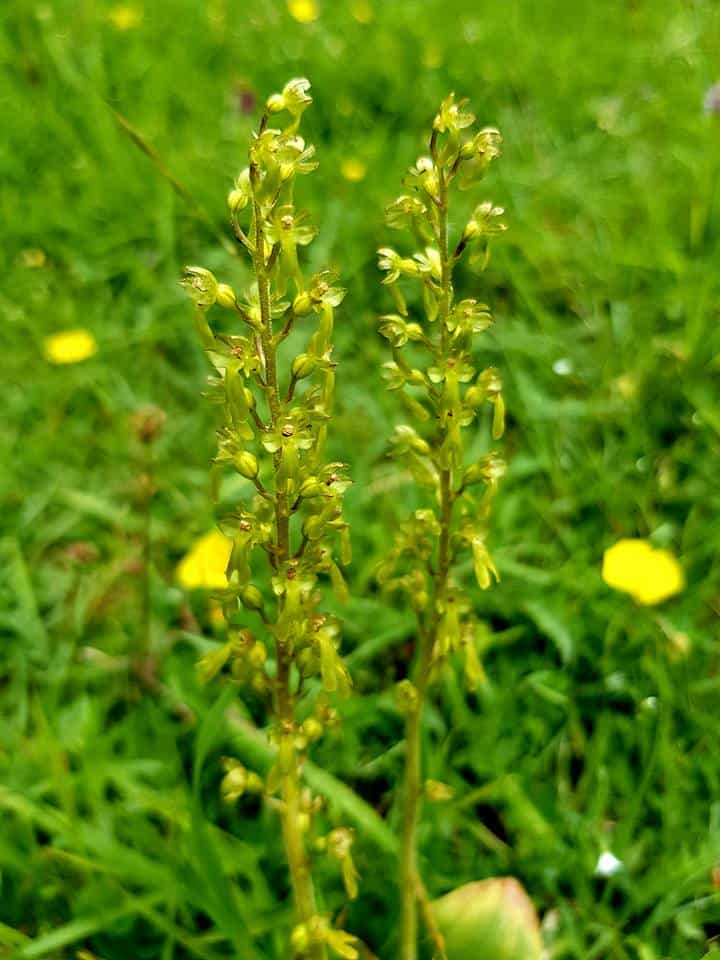
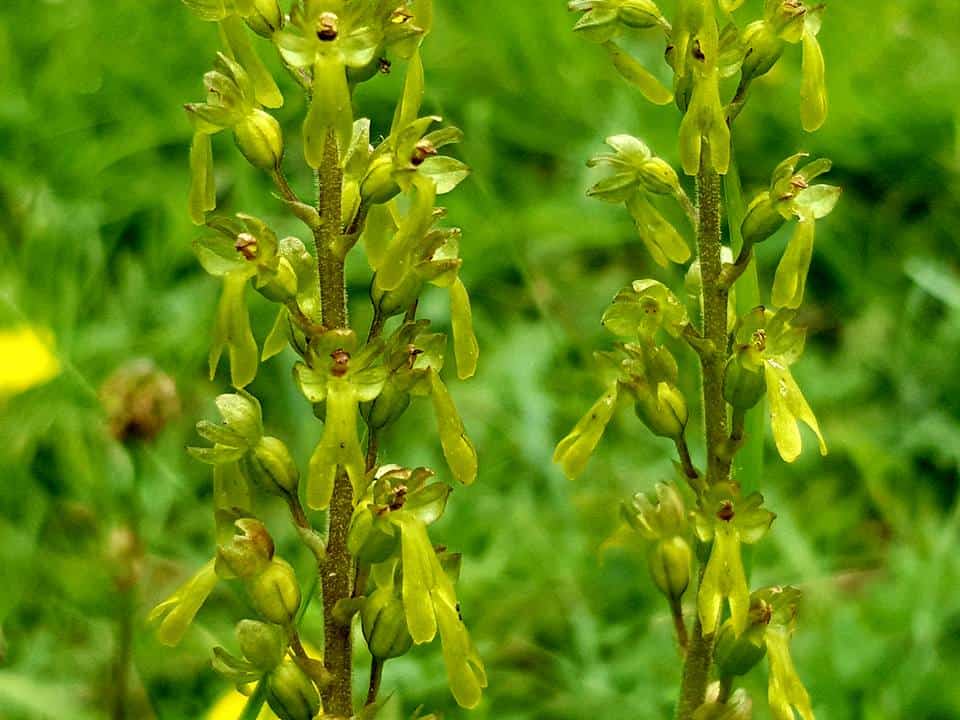
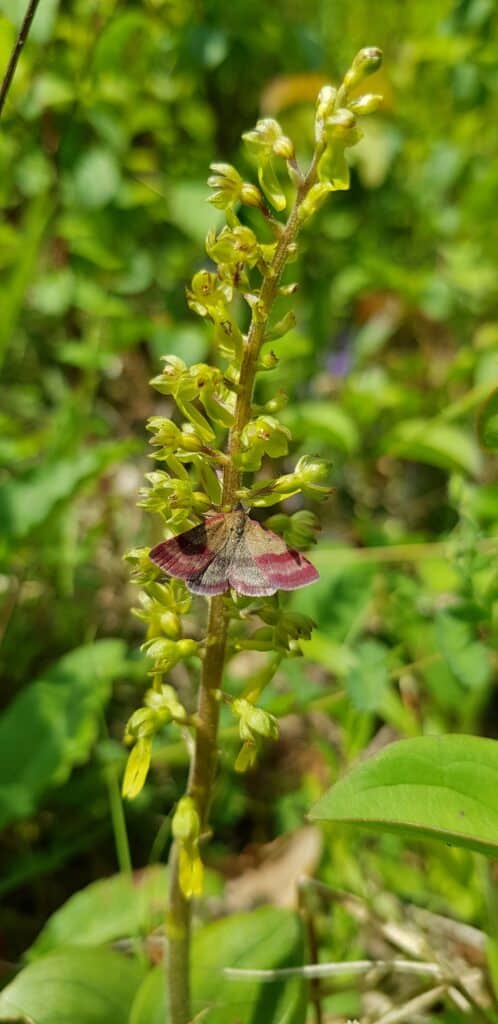
Common Twayblade Neottia ovata – May July
I must have walked past loads of these before I got into orchids… the first time I stopped to investigate one, I didn’t even realise it was an orchid! They’re named for their distinctive pair of opposite-facing leaves near the base and are renowned for being long-lived… up to 40 years! They have an explosive pollination mechanism that is triggered by small insects when they land on the lip of the flower to feed on it’s nectar. Monkton Nature Reserve is a cute place to try and find some.
The species of orchids that you can find change with seasons. These are the Spring-time orchids that I have seen in Kent – stay tuned for part 2 where I share some of the species you can find heading out of Spring and into Summer…