This week, I thought we’d take a closer look at some of the smallest residents here at the park, our honey bees. When you think about the animals that call Wingham home, bees might not be the first that spring to mind. I won’t lie, it has been a few trying months with this hive as I’ve had a couple of queens bees decide to abdicate their thrown and decide that the grass was greener somewhere else, giving me more than my fair share of challenges along the way. Beekeeping certainly has a way of keeping you humble! But after all the ups and downs, the hive has finally found its rhythm. The bees have worked incredibly hard, building their colony, collecting nectar and filling those frames with honey. And now, finally, we can shout SUCCESS from this hive as we have recently collected our first Wingham Wildlife Park Honey!


As summer draws to a close and the warm days begin to disappear, the hive starts to change. The frantic activity of Spring and Summer slows down and the bees begin preparing for the months ahead. Winter may seem a long way away while there are still sunny afternoons and bees coming and going from the entrance, but for honey bees, preparations have already begun.
End of Summer
As the warm weather comes to an end, the hive begins to move into a completely different phase. There are fewer flowers available, daylight hours are getting shorter and temperatures begin to fall. The queen gradually reduces her egg laying, meaning the amount of brood in the hive decreases. The colony no longer needs to maintain the huge population required for summer foraging, so instead, they begin conserving their resources.

Winter Preparations
Autumn is an important time as the hive needs to enter winter strong, healthy and with adequate food stores. I will also provide them with supplementary feed which gives them an extra helping hand. This is also the time to make sure the hive is in good condition and protected from the elements without preventing the bees from having adequate ventilation. Pests and diseases can also be a concern going into the colder months so having healthy bees will give a much better chance of coming through winter successfully.
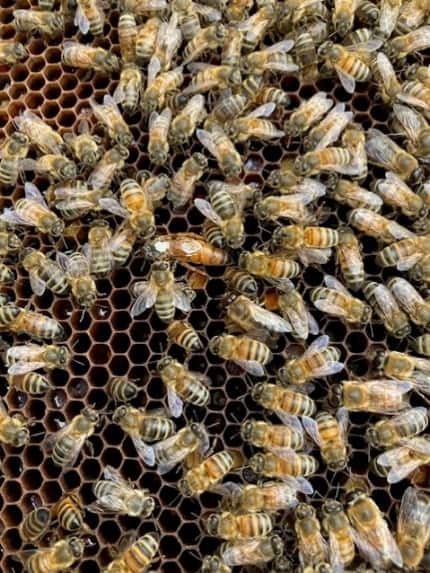
Winter is a test of the colony as temperatures fall the bees gather, with the queen protected towards the centre of the cluster. The bees on the outside form an insulating layer, while those nearer the centre generate heat by vibrating their flight muscles. You might find on warmer winter days, the cluster may loosen and some bees may leave the hive briefly. However, on very cold days they will remain tightly clustered. They must balance several competing needs such as keeping warm, conserving energy, maintaining their queen and surviving on the food they have stored. For a beekeeper it is careful observation rather than constant intervention.
The stores collected during the summer are essentially the colony’s winter fuel. Bees cannot simply fly out to find food when temperatures are low, so they need enough stored honey to sustain themselves through periods when there is little or no forage available. The amount of honey required depends on factors like hive size and weather, but a typical colony may need around 20 kilograms to sustain itself through winter…that’s a lot of honey. Eventually, winter gives way to spring with temperatures rising. The first sources of pollen become available; the queen begins laying more eggs. The bees that have survived the winter now have a new generation to raise.


Spring Time
Spring is when the colony really begins to build. With temperatures rising the flowers start producing nectar and pollen, the queen increases her egg laying. The worker bees become increasingly busy feeding larvae, cleaning cells, collecting food and building comb. The number of bees in the hive grows rapidly and can become overcrowded. When there are large numbers of young bees and plenty of food coming in, the colony may decide to split, this is called swarming. Something that happened to me last year, I suppose its apart of beekeeping.
Summertime… Busy Bees
The busiest time of year for a strong colony that can contain tens of thousands of bees, with workers constantly flying between the hive and the surrounding countryside. Some collect nectar, others gather pollen, while bees inside the hive process nectar into honey and care for the developing brood. The queen will be laying large numbers of eggs each day, maintaining the population needed to keep the colony functioning. This is also when I can harvest some of the colony’s surplus honey.
For me, I think one of the most remarkable things about keeping bees is, it’s never simply a box full of bees. It is a living community, constantly responding to the seasons and working together to survive. As we enjoy the last warm days of the year, the bees are already looking ahead. Summer is ending and winter is coming and the cycle begins again.
By Matt, Head Keeper



No Comments
Be the first to start a conversation