In this blog, I’d like to use a case study to help explain Reinforcement training, the use of positive and negative reinforcement, what it means and show that “negative” doesn’t mean bad!
Negative reinforcement is incredibly useful in training and is used to increase desirable behaviours in a very effective and efficient way. Use of the word negative in the title leads to misinterpretation of the practice, but it is nothing to do with the word negative in that sense. Instead, think of the word negative meaning subtraction of aversive stimuli.
Aversive stimuli being the thing that the animal is fearful of/ unsure of/ newly learning. For example; going into a new area or seeing a set of scales or crush area for the first time.
To explain, I will use the example of our serval cat here at Wingham Wildlife Park, Maggie who I have started to train to use the crush, this is just an area on her training shelf that is slightly narrower and runs parallel to the mesh, this allows the trainer to have access to the side of the cat. The goal is to train her to comfortably lay down in the area for future vaccination training.
When building a new behaviour with an animal they can be a bit tentative or nervous to begin with and when this continues with only asking the animal to touch the target further into the crush (aversive area), this can cause some frustration in the sessions.
Instead of only driving the animal further into the aversive area, we use a ‘relief’. So I would move the cat slightly towards the aversive area, then reward (positive reinforcement) and then offer a target further away from that area as the relief, in an area they are visibly more comfortable (negative reinforcement). This is the subtraction of being close to that aversive area. The reward of the food combined with moving them to a more comfortable area not only builds confidence in the animal but it reduces frustration.
This would then be built upon by moving the cat back towards the aversive area and then the relief target gets slightly less far away each time.
Sessions using negative reinforcement show rapid progress and work really well in so many different scenarios.
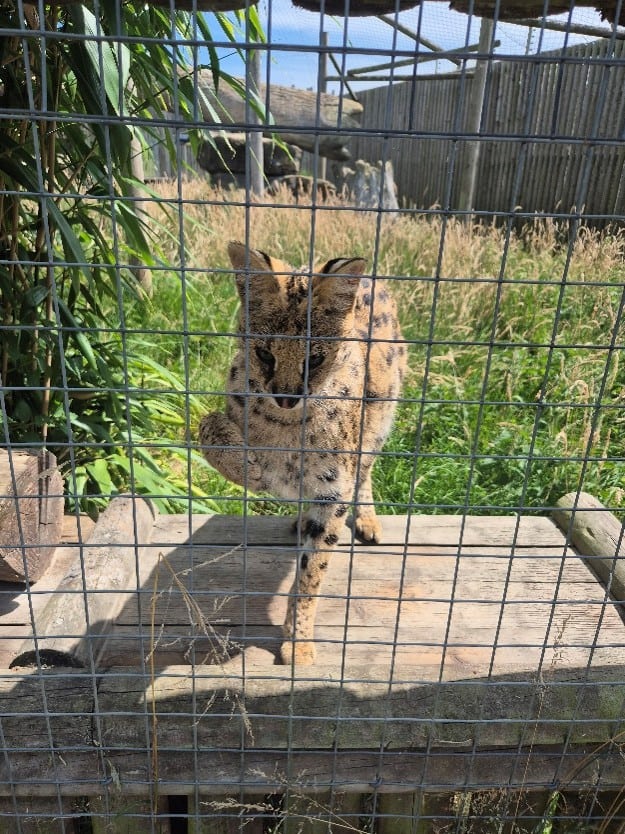
Step 1: When training Maggie to enter the crush area for the first time, she was a little unsure. The crush area in this case is simply a shelf with a log on top which the animal needs to stand alongside and next to the mesh. This means instead of coming head-on to the mesh to get food, she needs to come in and present her side to the mesh, which is quite unfamiliar to her. The space next to the crush on the shelf she was already comfortable sitting on so this is my relief area.
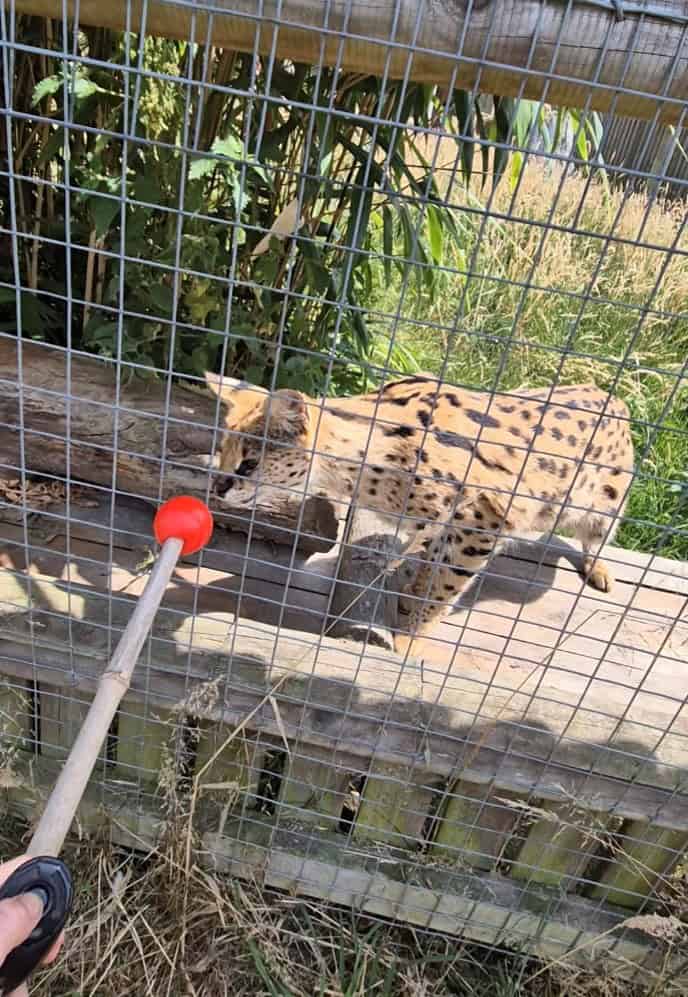
Step 2: After becoming familiar with the target I held it slightly into the crush area and rewarded. At the start you can see some behaviours that she was unsure as she was leaning forwards and extending her neck to reach the target rather than walking straight towards it.
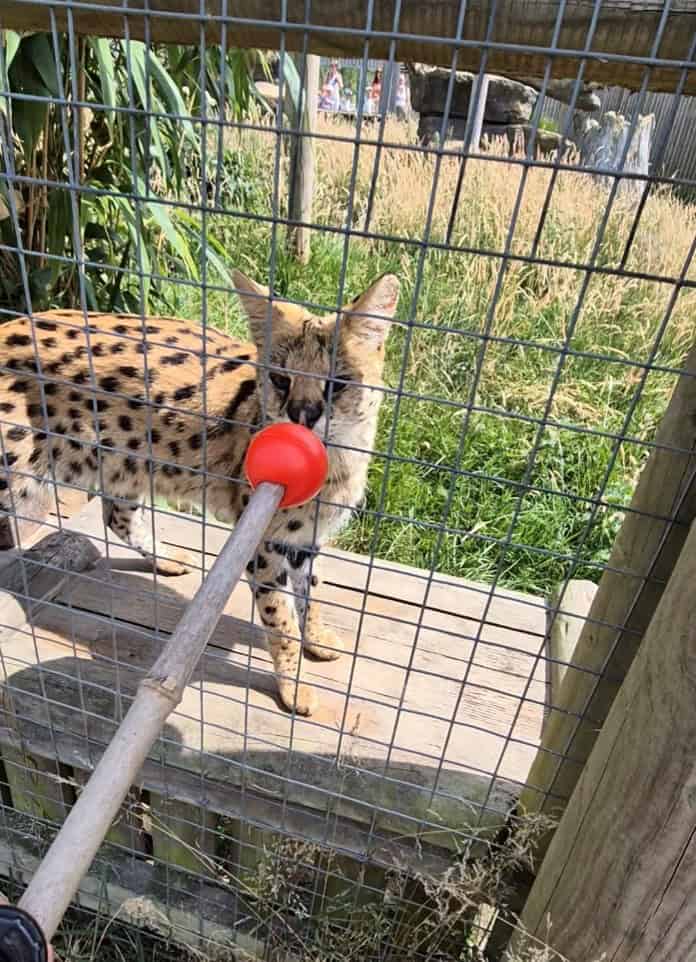
Step 3: As soon as this reward was finished I move the target back towards the open shelf area where she is visibly comfortable and rewarded here (the relief area).
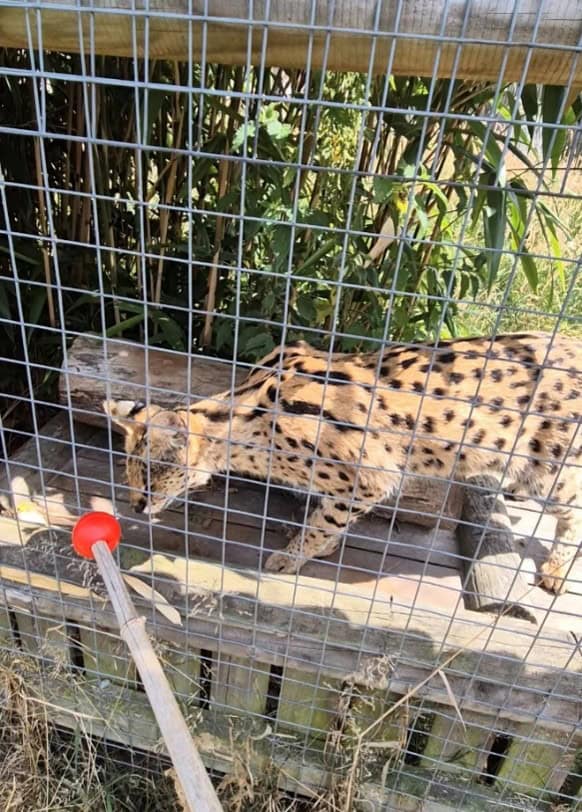
Step 4: I repeated this process, holding the target a bit further into the aversive area and a bit less into the relief area each time.
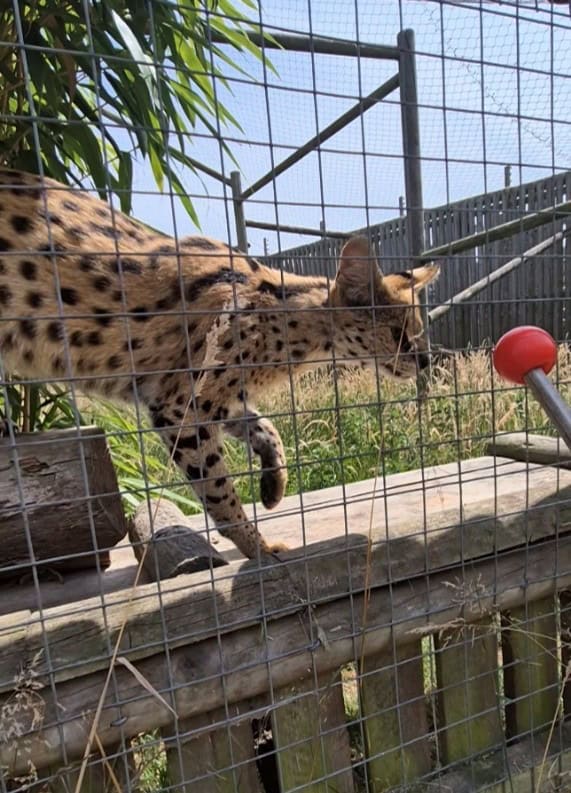
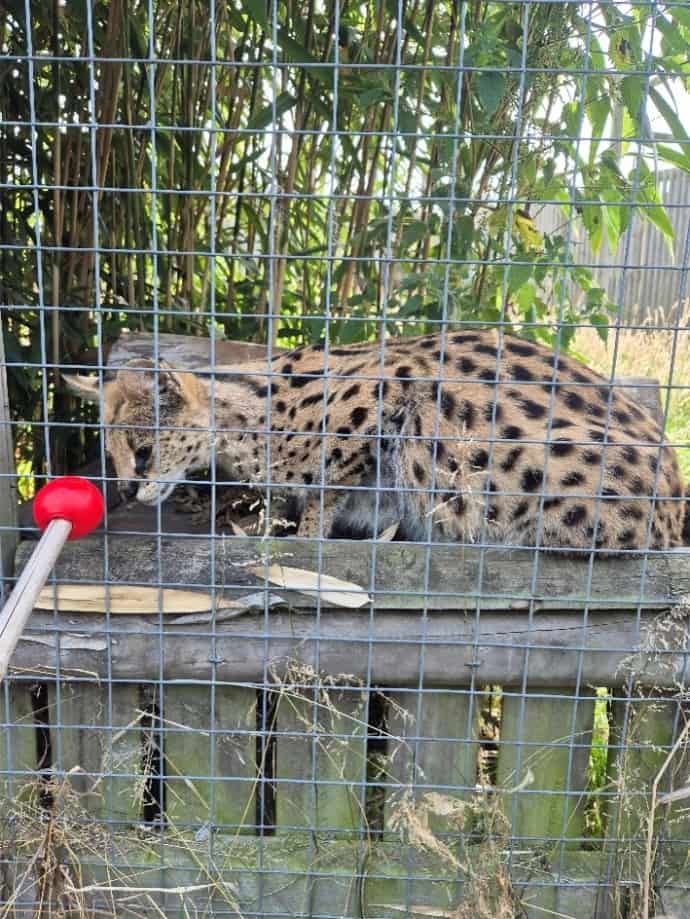
After only a few repeats of this she then decided that actually she then wasn’t that aversive to staying in this area. She preferred to stay and take the rewards in the crush area than to move back to the relief area even when I offered… success!
This is then a pivotal moment that was achieved in less than 20 minutes of training. I then jackpotted this behaviour by continuously rewarding her while she was in this position, to which she responded by laying down to finish all her rewards – here we have a clear calm behaviour to end the session on.
Negative reinforcement training is a fantastic method, not only providing the animal with extra choices but also giving fast and effective progress.
By Georgia, Head of Training