Today I’m going to introduce you to the latest arrivals to the invertebrate house here at Wingham Wildlife Park! And more importantly, how to spot them on your next visit!
French Guiana Dead Leaf Katydid
Typophyllum trapeziform
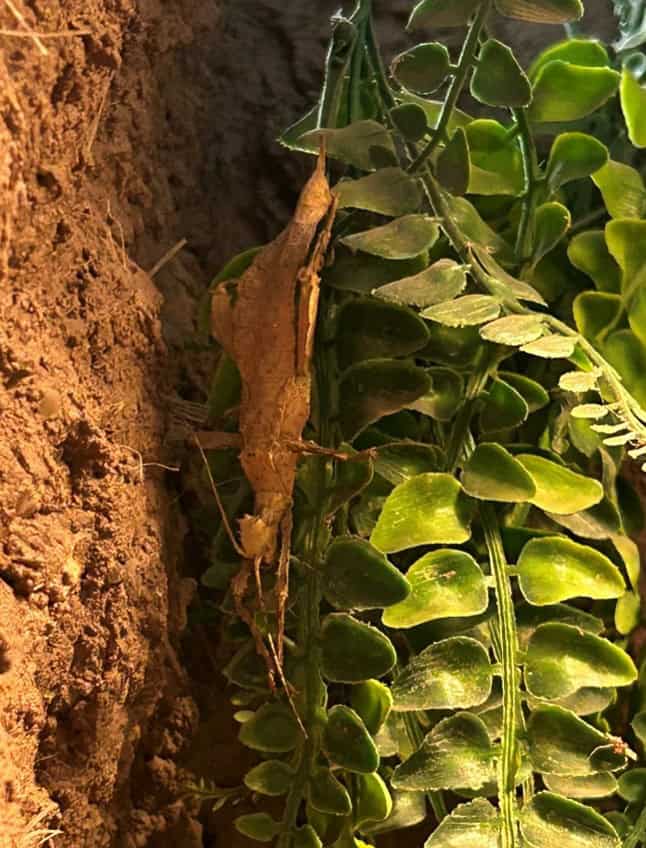
The fist of our new arrivals is the French Guiana dead leaf katydid! If the name didn’t give it away, this species is found in areas of French Guiana especially on the forest floor! Its brown colouration and leaf-shaped wings allows it to easily blend into the forest floor and hide from predators. Little is known about these insects in the wild. In captivity, these insects feast almost entirely on Buddleia, the toxins which the plant contains is believed to be beneficial to the insect. Apparently, the males have been known to chirp but I have yet to hear this!
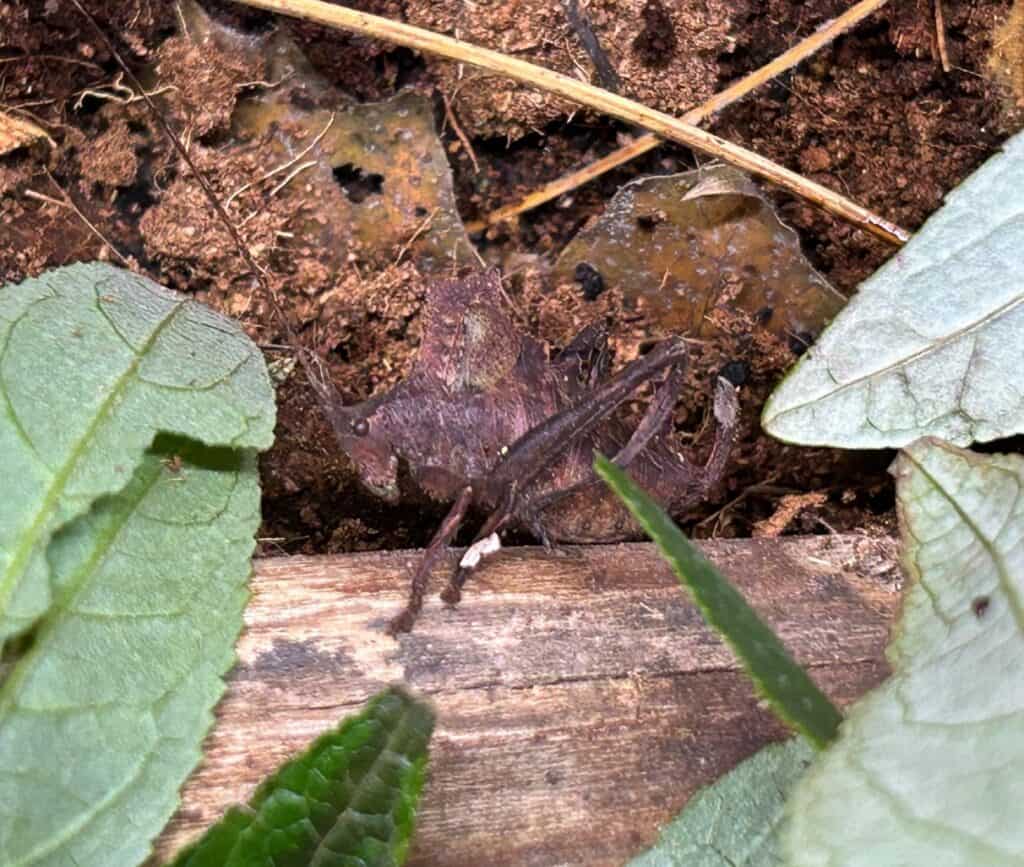
So where is the best place to see them? When looking in their enclosure look along the floor and, on the buddleia.
Giant Hooded Katydid
Siliquofera grandis
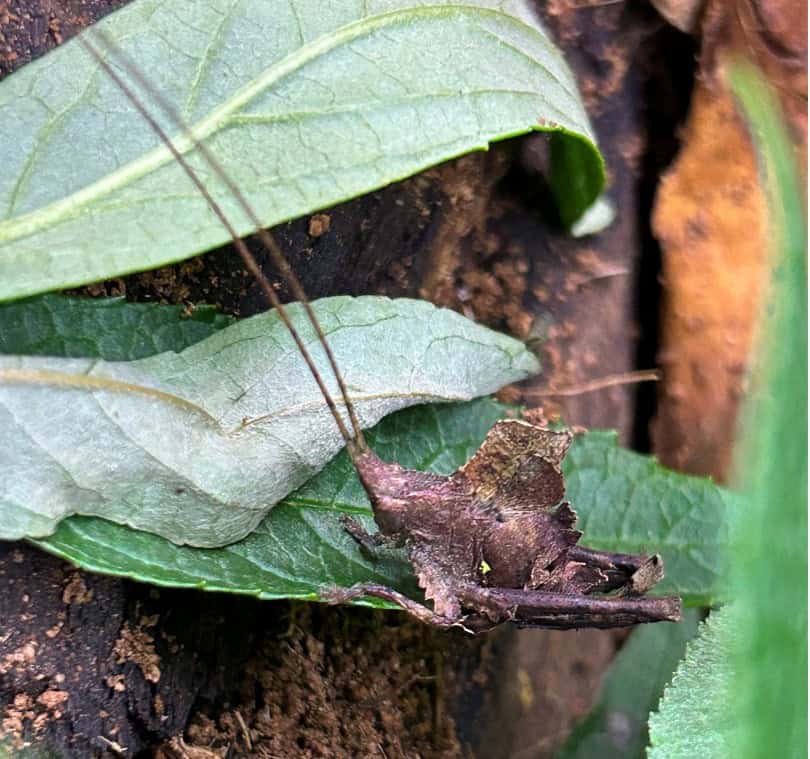
The next of our new arrivals is the giant hooded katydid. These are one of the largest species of katydid in the world that can reach between 10-13cm, with a wingspan of 25cm! Females can weigh over 30 grams! Here at the park, we currently have nymphs (babies), so when you’re looking for them remember they aren’t this big yet, but they will be in a couple of months! They are native to Papua New Guinea and some of the smaller Indonesian islands where they live in the canopy of the rainforest. In captivity, these bugs feast mostly on bramble and spend the majority of their time on their plants in their enclosure.
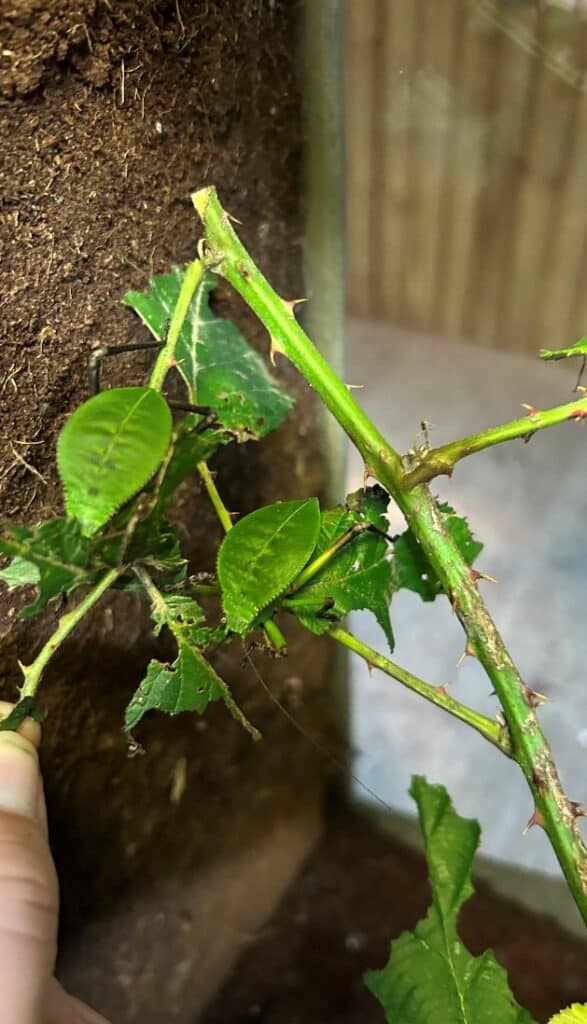
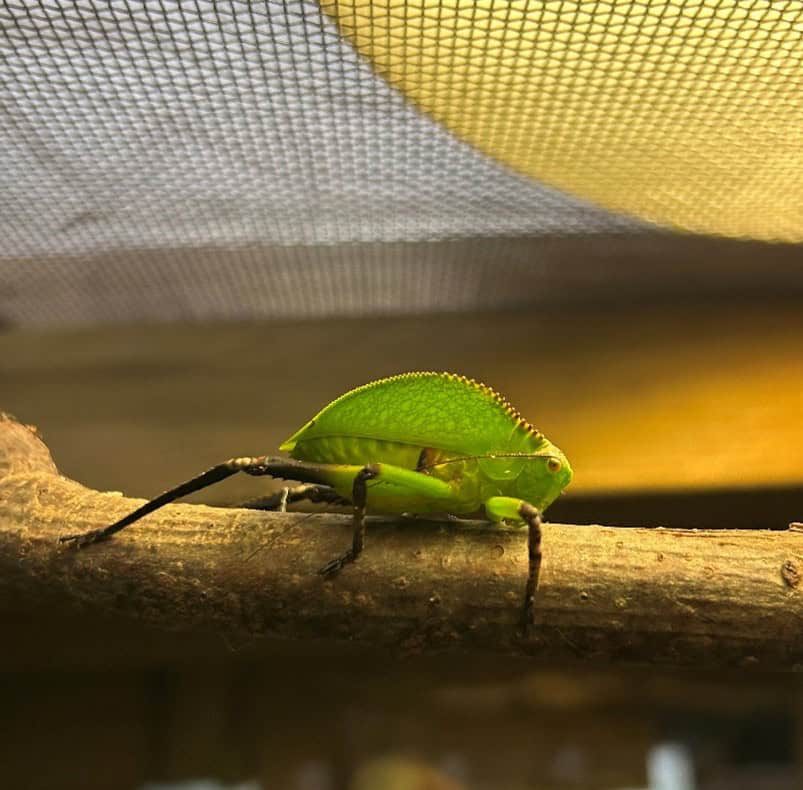
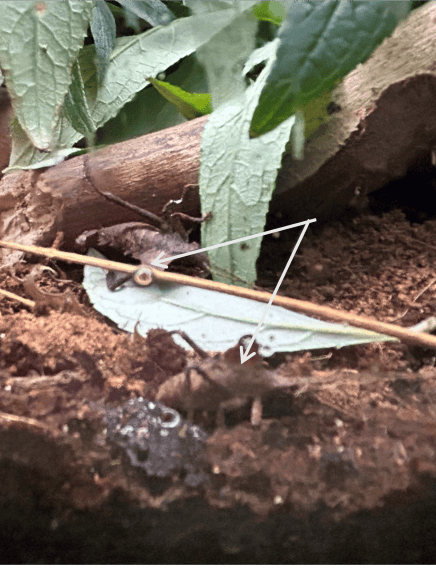
You may be asking yourself, can they hear? Well, I think you’d be shocked to learn that all species of katydids have ‘ears’ located in their front legs, just below their front knees. These are simple structures, basically shallow holes containing tympanum (the buggy equivalent to our eardrum) which allows female katydids to not only hear when a male is chirping and calling her to mate but also what direction his chirp is coming from!
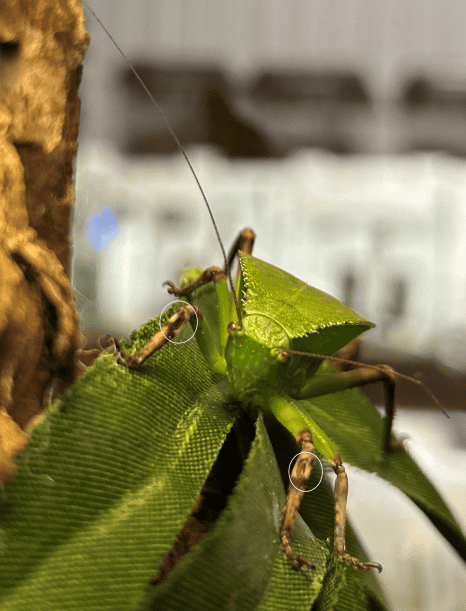
Giant hooded katydid with its ears circled!
Jungle Nymph
Heteropteryx dilatata
Jungle nymphs are found in dense, humid rainforests of the Malay Peninsula and surrounding islands of Southeast Asia. Thise insects are sexually dimorphic, meaning that we can identify if they are male or female by looking at them. As adults the bright green females average at around 6 inches and are very bulky without usable wings, whereas the males are slender and brown with usable wings. This is a very large and bulky species; the females average at 6 inches and are very robust. The males are much smaller, averaging at 3.5 inches, and slender with wings that allow them to fly. The group we have here at the park is made up of four males and four females. However, they are nymphs so they are browner in colouration, but you can still identify which sex they are based on their body shapes!
The jungle nymph, especially when it reaches maturity can be a little spicy to handle. This is because the adult females have very thick spines on their legs which they can use as a defensive weapon by pinching whoever or whatever has her in their grasp. For a human this will hurt and have been known to draw a little blood but it’s not dangerous!
When having a look for these insects, you’re best off concentrating your search to the bramble inside the tanks, usually the jungle nymph doesn’t stray far from its food source!
Giant Vietnamese Leaf Insect
Cryptophillium limogesi
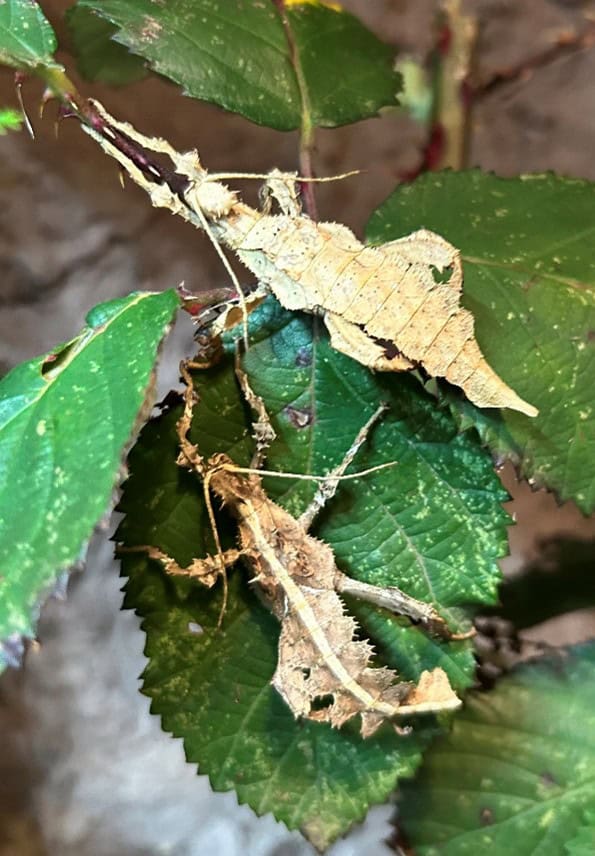
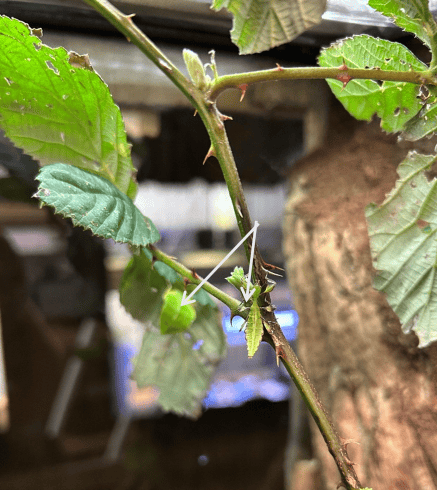
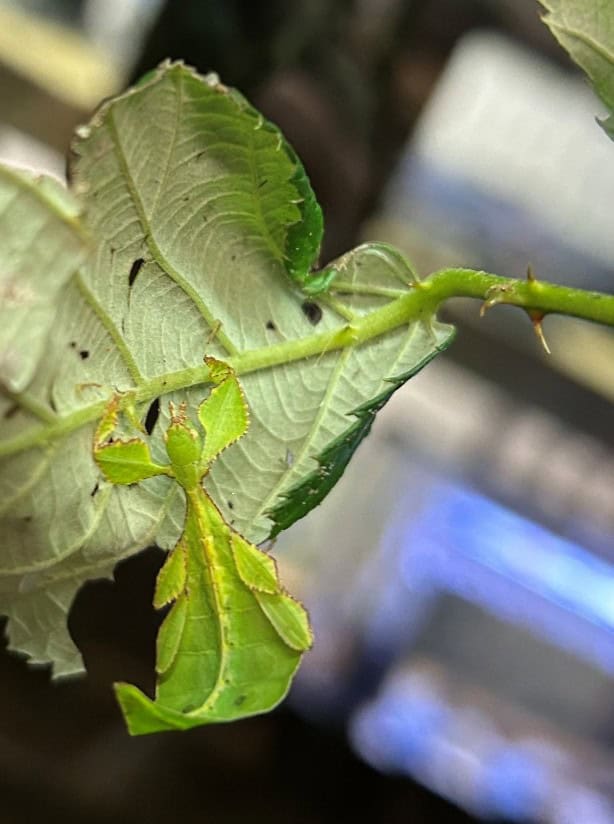
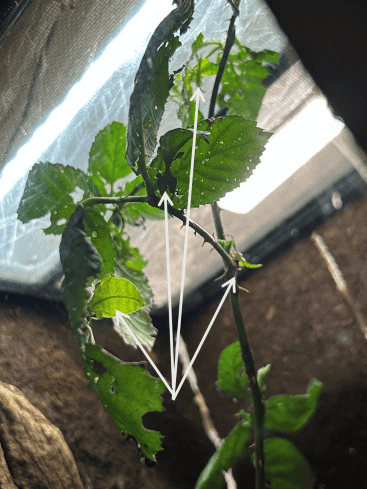
You may have already guessed but the Giant Vietnamese leaf insect is a species of insect that looks like a leaf and hails from the tropical rainforests of Vietnam! The adult female of this species reaches approximately 9-12cm in length! The males of this species are thinner and smaller (reaching 8-10cm) with long antenna and functioning wings whereas the females have larger but unusable wings covered in veining to mimic the structure of a leaf. The nymphs of this species are green and don’t develop their wings in full until their final adult moult.
FUN FACT
Females live for 10-14 months whereas males live for 8-12 months and grow significantly faster than the females!
Currently, the insects here at wingham are nymphs so when looking in the enclosure you want to look for small green leaf shaped bugs hiding on the bramble leaves!
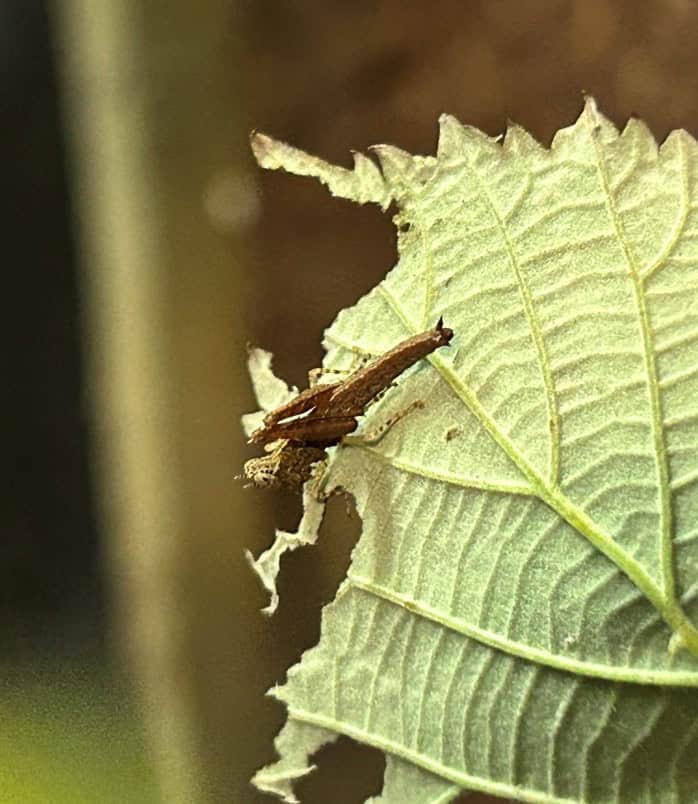
Monkey Grasshoppers
Erucius bifaciatus
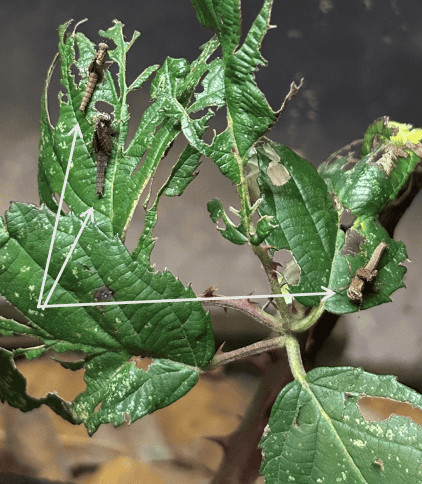
This species of grasshopper is primarily found in Vietnam and Malasia. They feast mostly on leaves and plant matter. In captivity we feed them bramble which is where you’ll see them spending most of their time!
Bumblebee Millipede
Anadenobolus monilicornis
This species of millipede is native to the Caribbean and has been introduced to southern Florida where it thrives. The bumblebee millipede gets its name from its colour! This is a small burrowing species of millipede, rarely growing bigger than 3 inches. Bumblebee millipedes are detritivores! This means that they feast upon organic decaying matter including dead leaves and plant material.
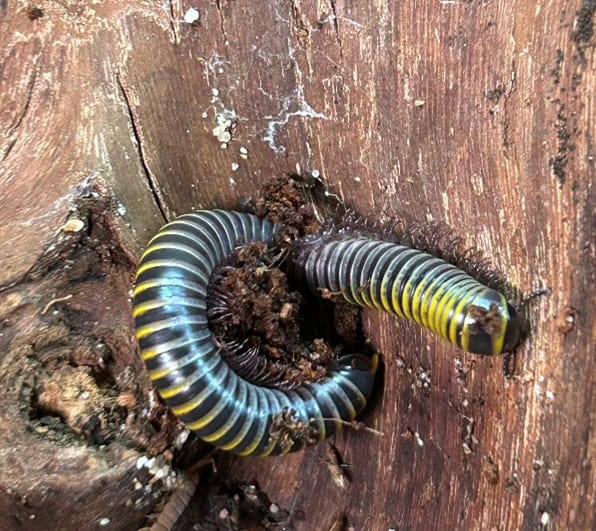
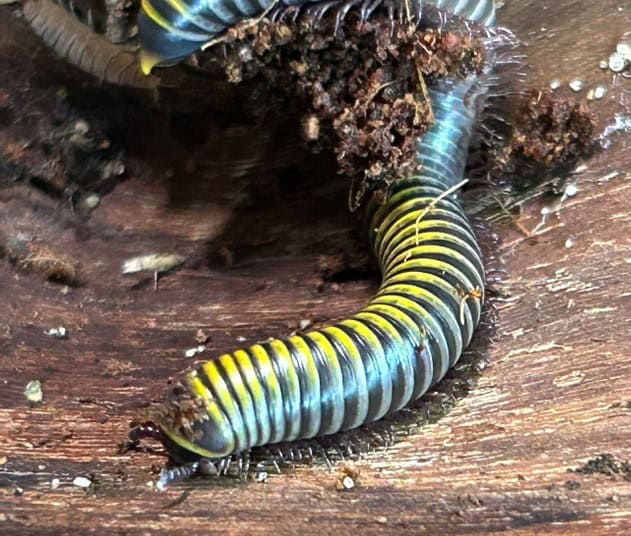
DID YOU KNOW? The bumblebee millipede has a lifespan of 3-5 years!
Zanzibar Snail
Lissachatina zanzibarica
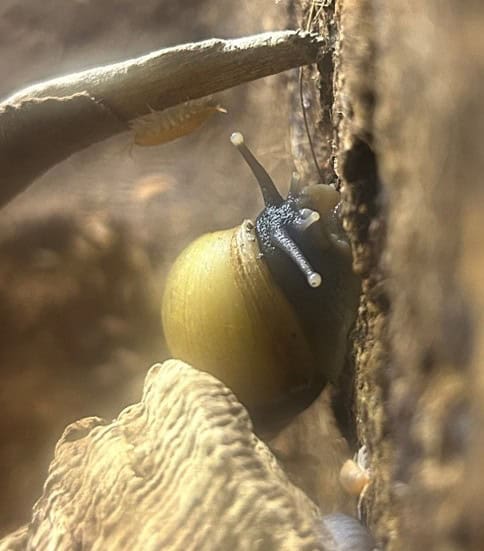
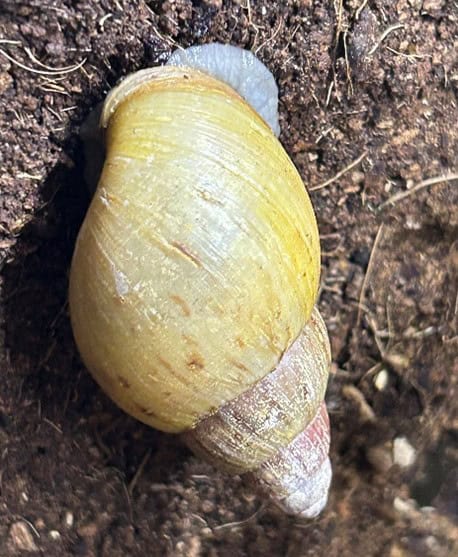
This species of snail is native to costal regions of Tanzania in Southeast Africa. When fully grown this species reaches between 8-13.5 cm in length! In the wild the Zanzibar snail inhabits humid forest floors and grasslands. In my opinion, one of the coolest facts about this snail is that it is ovoviviparous. This means that the snail produces eggs but never releases them, instead hatching them inside its body and giving birth to the live young. Not only this but this species of snail is hermaphroditic meaning that it possesses both male and female reproductive organs! Essentially, it’s a live birth baby snail making machine!
This species of snail is known for being very active and only burrowing to birth its young so when you visit it may well just be hanging out in the tank. If you can’t see her then make sure you look up, she likes to hang out on the lid of her tank!
Centurion Cockroach
Gyna centurio
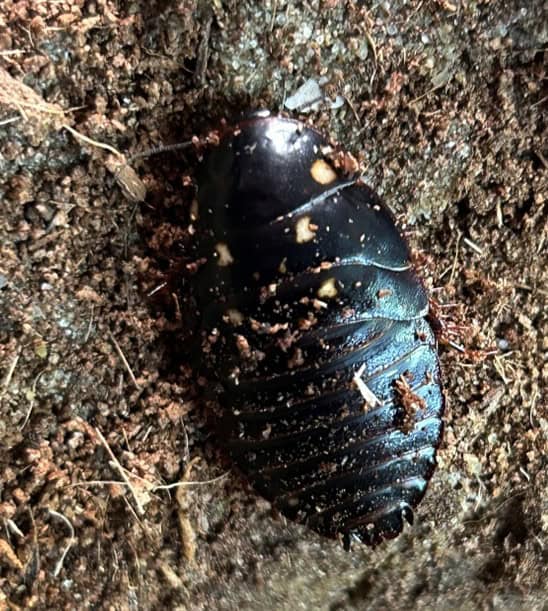
The last of our new additions is the centurion cockroach. This species is native to East and Central Africa. As another detritivore, its diet mostly consists of rotting wood and decaying matter and is vital for recycling nutrients back into the ecosystem. Currently these guys are nymphs so when you visit, they may be burrowed away, however as they start to mature the adults spend more time above ground. Currently, these guys do not have wings and are brown, however, as they mature, they will develop usable wings and become black and white.
I hope you’ve enjoyed this quick introduction to our new bugs of the Bug Room! Hopefully, you can now find them all on your next visit!
By Beth, Deputy Head of Reptiles & Invertebrates


No Comments
Be the first to start a conversation