Here at Wingham Wildlife Park, we’re very lucky to be home to some of the most incredible species you ever laid eyes on! On the Mammal Section especially, we work with a wide diversity of animals, from the taller giraffes to the smaller naked mole rats.
As keepers, we often get asked questions about our wonderful animals: What are they? How would they survive in the wild? How do they feed? We love your curiosity and don’t blame you for wondering all these things because… well… have you seen how strange and unique our species are?! In the best ways of course. So, today’s blog will be answering some of these questions and highlighting the weird, the wonderful and some of the completely bizarre animals we get to look after everyday here on the Mammal team!
Giraffes
It wouldn’t be right to not start this blog off with one of the weirdest and most wonderful animals not just in the park but on the planet – the giraffe! People are always curious to know more about our giraffes and rightfully so! Those long necks mixed with a funky pattern and eyelashes most models dream of, definitely spark the imagination. Even a unicorn seems more normal on paper in comparison. So here are the most commonly asked questions we get at the park, and their answers explained:
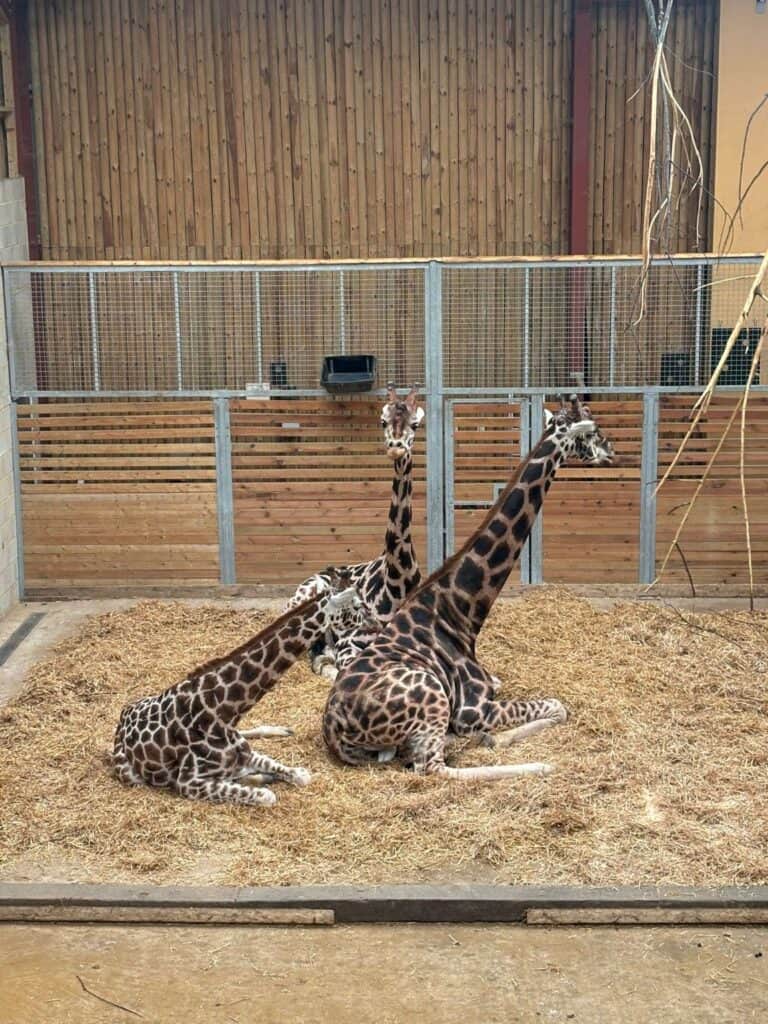
Question: Why do they have long necks?
A long neck allows giraffes to access hard to reach browse at the tops of trees, that’s otherwise inaccessible to other animals. In fact, most of a giraffe’s anatomy, including their prehensile tongue and long legs, is designed to be long and flexible, allowing them to reach those hard-to-get branches. This reduces competition for resources, having their own food supply and provides a greater opportunity to survive Africa’s harsh seasonal changes.
Their long necks also allow females to defend their offspring from predators, and also allows the males to compete in battles for the right to breed with females, with a behaviour known as ‘necking’.
Their height advantage also means giraffes have an unrivalled view of their surroundings, protecting them from the potential ambush of predators.
Question: What are the patterns for?
Just like the human finger print, every giraffe’s pattern is unique from each other’s, making it not only easier for us to tell them apart but also for other giraffes to differentiate between members of their herd too.
The spotted pattern also makes for great camouflage on the African savannah, breaking up the animal’s silhouette and allowing them to blend into the trees and shrubland surrounding them through the dappled sunlight.
Scientists have also discovered that the patterning on a giraffe allows for thermoregulation: a way for animals to maintain their core temperature even when the surrounding environmental conditions are extreme. There are specialised blood vessels under the skin where the patches are on a giraffe’s body, where heat can be dissipated through the blood that’s sent there. In short, it’s a built-in air conditioning system that keeps these animals nice and cool.
Tapirs
Our two Brazilian tapirs at the park, Nando & Kathleen, always seem to put a smile on people’s faces. This funky duo can often be seen waving their trunks around, ‘smiling’ at our guests, or swimming around together, causing chaos, in the lake. Tapirs look like a bizarre cross between a hippo and an elephant, but they’re more closely related to rhinos and horses! Here’s some more fun facts about these unique water horses:
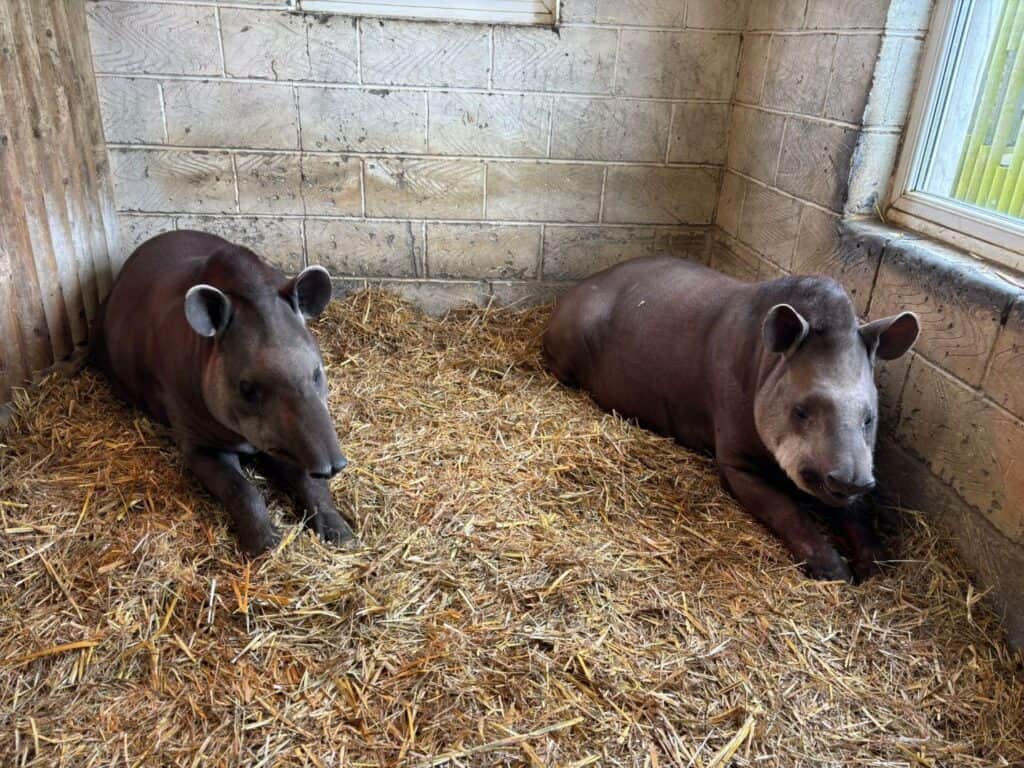
Question: What is their trunk for?
A tapir’s ‘trunk’ is actually a prehensile snout, that’s formed by the extension of their upper lip and nose. As browsers, they use this specialised nose to grab leaves, twigs, branches and fruit from shrubs, brushes and trees in the South American forests where they live.
Tapirs are fantastic swimmers and will also use their trunk as a snorkel while their submerged under water.
Question: Why do tapirs swim?
Being excellent swimmers allows tapirs to cool off more efficiently in the water, helping regulate their body temperature. They also use water sources to evade predators, such as jaguars and can stay submerged for up to five minutes, using that snorkel-like snout to breathe.
Bats
Bats get a bad rep in the media for being these spooky, scary creatures that fly around in your hair and drink your blood. But I can promise you, our colony of Egyptian fruit bats are actually rather timid and very sweet. As you’ll find, they’re very interesting creatures:
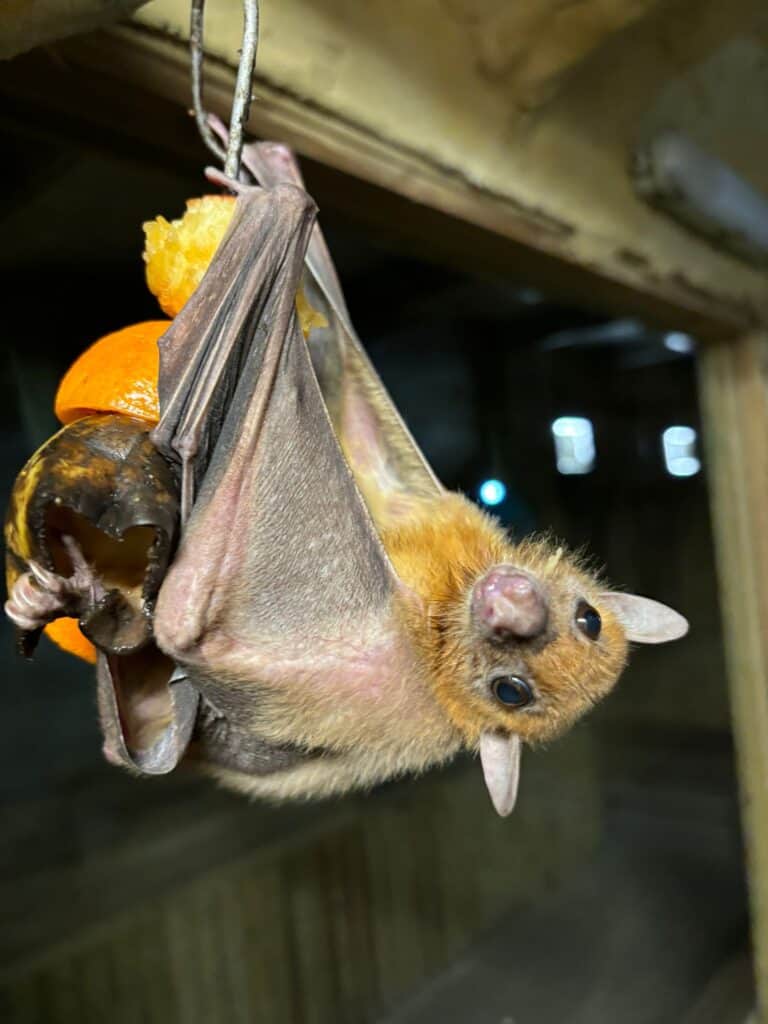
Question: What do bats eat?
Contrary to popular belief, most species of bat don’t drink blood and are actually insectivorous; with a diet consisting of insects like flies, moths, and mosquitos. Many species of bat instead have a diet consisting of fruit, pollen, and nectar, with only a handful of species feeding on small vertebrates or animal blood (such as the iconic vampire bat).
At Wingham, we feed our Egyptian fruit bats a variety of fresh fruit, which we hang on skewers to allow for natural feeding behaviours.
Question: How do they see in the dark?
Most bats have eyes that are adapted to nocturnal life, however many also use a specialised biological sonar system, known as echolocation, to ‘see’. They start by emitting high-pitched, ultrasonic pulses that then bounce of objects in their surroundings, and allow them to build a 3D picture of the world around them – also allowing them to find and catch prey. Amazingly, there are some species that have cones in their eyes that are sensitive to ultraviolet light, allowing them to perceive the UV patterns on flowers and find food sources like nectar.
Naked Mole Rats
These practically blind, nearly hairless, crafty critters are unusual to say the least, but they have evolved some of the most incredible and ingenious adaptations in the animal kingdom.
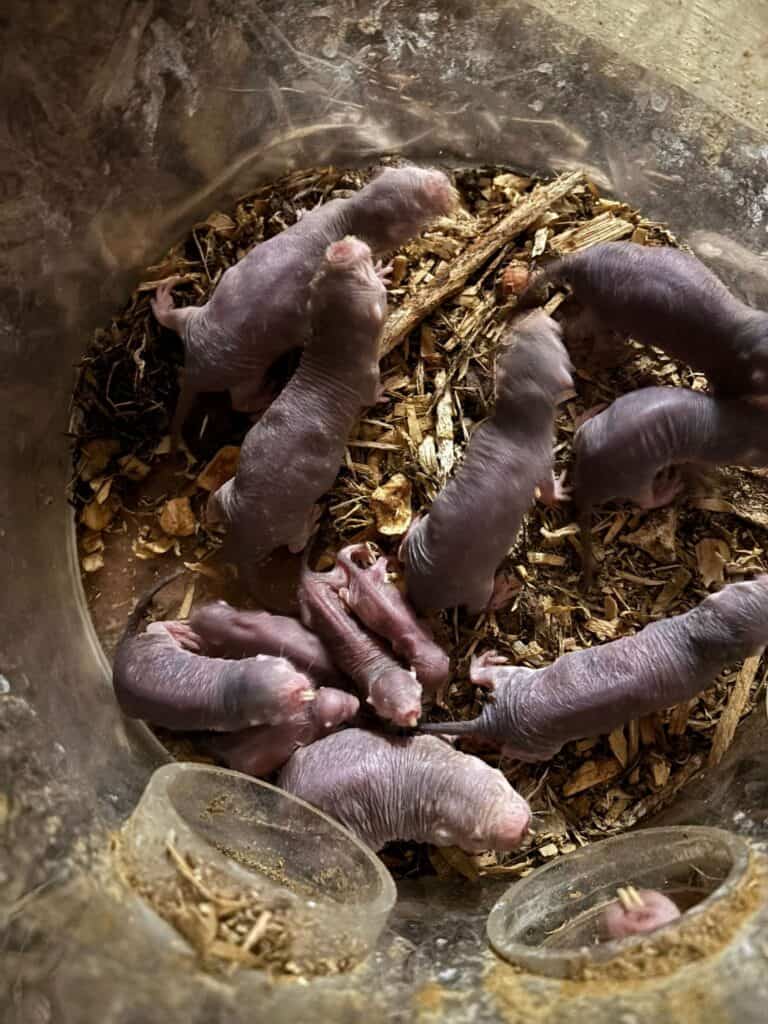
Question: Why are they “naked?”
Despite their name, naked mole rats actually possess around 100 tactile hairs across their body, which aid in navigating the dark underground tunnels they call home. They even have hairs between their toes, which, alongside sensory whiskers on their face, help detect soil and potential food in front of them.
However, the lack of most hair on these rodents’ bodies is due to not needing protection or camouflage from predators and sunlight and they also don’t require significant insulation due to their exclusively subterranean lifestyle. It allows them space to move more freely in tight spaces and for more efficient thermoregulation underground.
Question: Why can you see their teeth?
It may look like these animals don’t possess any lips, with their long incisor teeth being a strikingly visible feature on their faces. However, their lips are actually tucked tightly behind these teeth, allowing mole rats to dig through tough soil without getting dirt in their mouths. In fact, their four incisor teeth act as mini shovels, that are powerful enough to break through concrete!
Mara
These funky dudes look like someone tried to mix a rabbit with a deer… or squirrel… or maybe a capybara… Lets find out more, shall we?
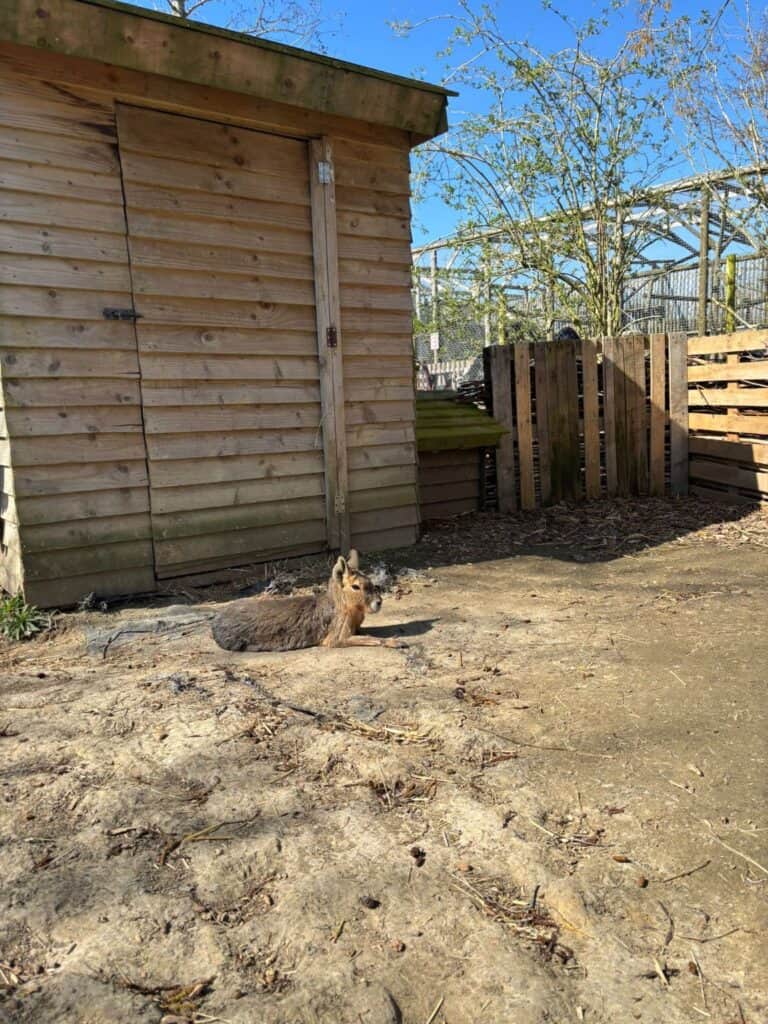
Question: What is a mara?
Though the rabbit/deer like appearance, the Patagonian mara is actually a species of rodent native to Argentina. They are actually the fastest rodent in the world, with recorded speeds of between 45-60kmph!
They live in large groups of over 60 individuals in the wild and will mate for life. Maras also live a surprisingly long time for a rodent, with individuals under human care living close to 15 years of age and around 10 years in the wild.
Question: Why do they have such long back legs?
These agile animals have noticeably long hindlimbs, that allow them to be exceptionally agile. Not only are they the fastest rodent in the world, but maras can also jump two meters off the ground, displaying behaviours such as ‘pronking’. They possess specialised bones in their legs that can handle heavy impacts and channel energy into these impressive leaps, making for an effective technique to confuse and escape from predators.
Wow, well that was a whirlwind! From the tallest residents at Wingham, to our chubby snorkelers and roadster rodents; I hope you’ve enjoyed learning more about some of our weird and wonderful species at the park and having some of your questions answered. If you ever have any questions about the animals on your visit to the park, feel free to a talk to any of us keepers. We love to share our knowledge with you all. Stay curious!
By Sophie, Mammals Keeper


No Comments
Be the first to start a conversation