Hello and welcome to the first episode of the turtle files in 2026! I know you’ve all been avidly waiting for the thrill that is learning about the turtles of the Reptile House, so let us dive straight in!
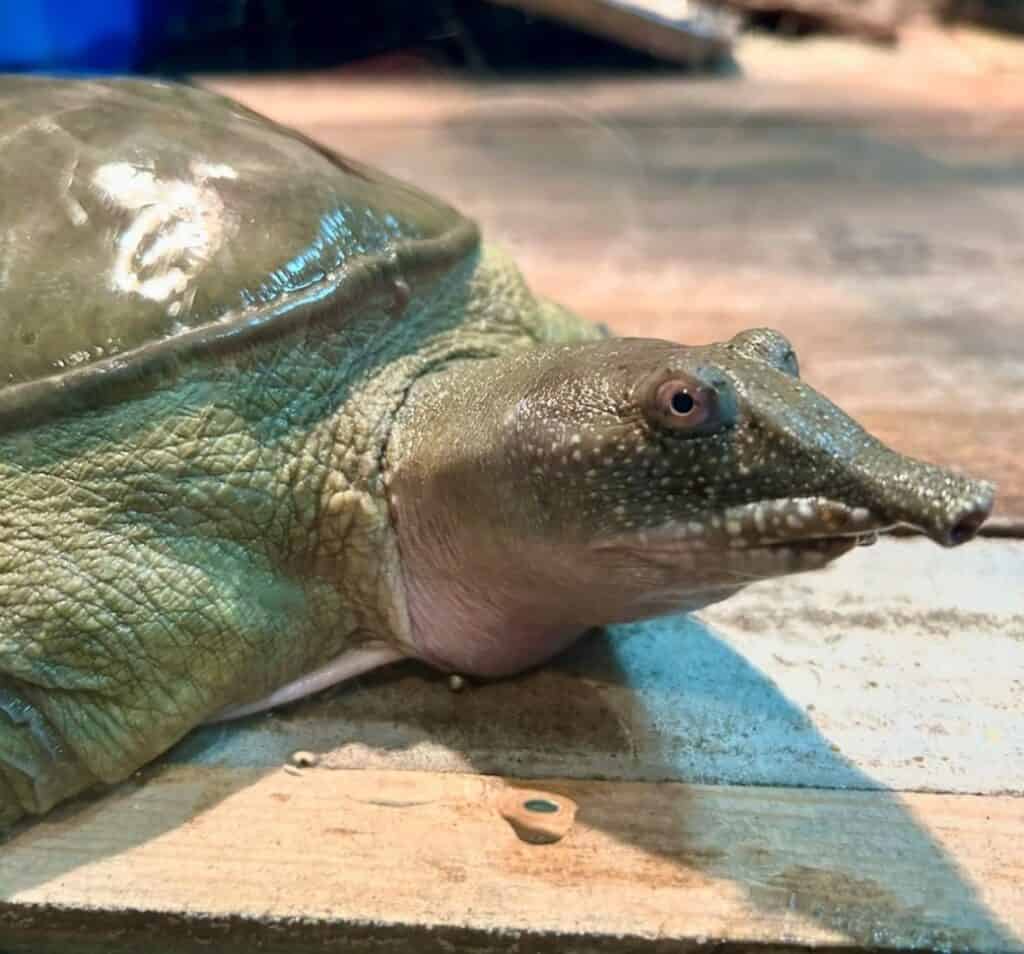
One of, if not the most peculiarly popular turtles in the reptile house is the Chinese softshell turtle. Mostly because she does look like she was made by a crazy scientist in a laboratory. She has a snorkel for a nose, webbed feet and a shell that looks slimy and squishy! All of these parts of her are evolutionary adaptations that help her and her species to survive in their natural habitat. These turtles are native to Southern China, Northern Vietnam, Japan, Taiwan and Hainan and like to make their homes on rivers, creeks, lakes, rice paddies, ponds and other marsh lands.
The softshell turtle is classified as vulnerable by the ICUN with numbers declining. Although they are bred and farmed for food, they are still often collected from the wild for this too and for the pet trade. Along with this, general habitat loss has also contributed to a declining wild population over the years.
ADAPTATIONS!
So, let’s have a look at some of the softshelled turtles’ peculiar adaptions for freshwater living. For a start, the softshell turtles’ snorkel-like nose is perfect for being able to take air from the surface of the water without having to fully expose herself to the predators that live on land and potentially in the sky.
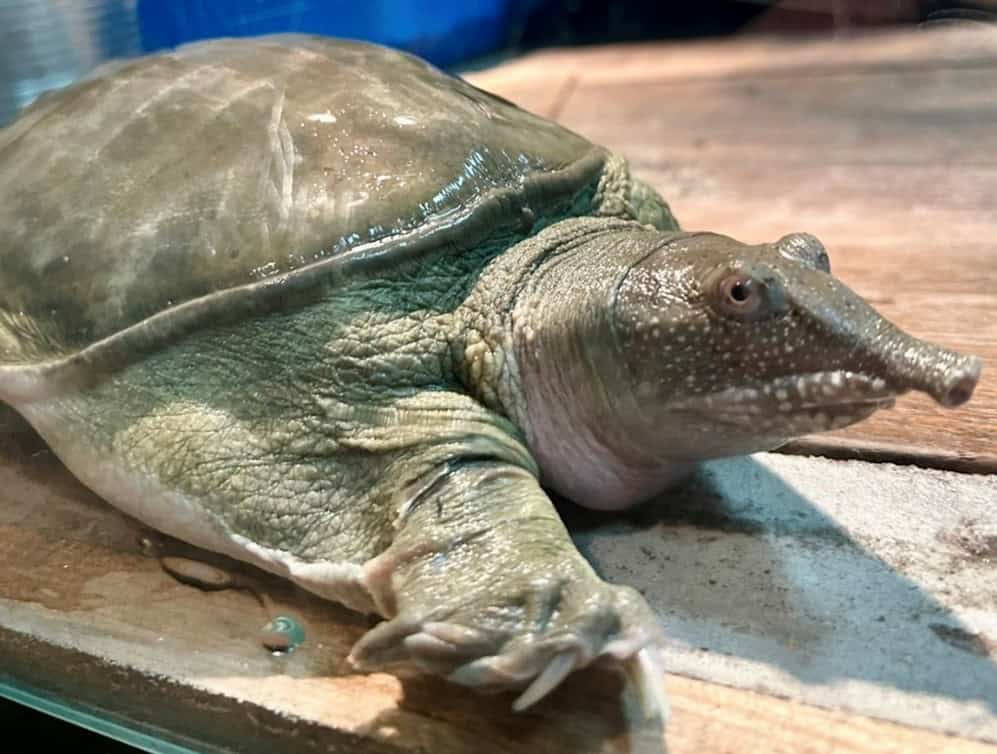
Along with this, her shell is not like that of a normal turtle, which is hard, covered in scutes and is more of a protective outer layer. The Chinese softshell turtle, has, you guessed it, a soft shell. This shell is almost leathery in texture and when wet has almost an amphibian slippery feel to it. The softness and the slim nature of this shell is to aid the turtle with its swimming under the water. Softshell turtles, unlike some other species of aquatic turtles, spend the majority of their time under the water, only really venturing landwards to lay eggs or bask any fungus of bacteria away. The streamlined nature of their shell is perfect for this life as it allows for effortlessly swimming away from underwater predators, such as alligators. The coloration of this soft shell also benefits the softshell turtle. In the wild, softshell turtles will often bury themselves under the sand on the bottom of the rivers to help hide away from predators.
FUN FACT: Female turtles can and will still lay eggs regularly even if they haven’t been mated. The Eggs that ‘Softie’ produces are one of Havoc’s, our Argus monitor, favourite treats!
You may be wondering; what does this unusual turtle eat? Well, wonder no more! The Chinese softshell turtle is technically omnivorous, eating a variety of amphibians, very small mammals, invertebrates, fish and very occasionally plant matter, however plants make up the smallest amount of their diets. They just do not like to eat their veggies!
The softshell turtle is one of the spicier species of turtle that we house in the reptile house. ‘Softie’ (the loving and very imaginative nickname I have given our softshell) does not hesitate to try and bite your fingers if they come a little too close to her. I like to think this is because she’s a greedy gut and a finger can surprisingly look like a rat pup to a turtle who think she’s getting her favourite treats. She does however have a surprisingly long neck too so when we do need to handle her to get weights and perform health checks, we do have to watch our fingers as she can reach them even if they are at the very base of her shell. Although she does not have teeth, as is the case with all Chelonians, she does have a very hard jawbone area, not too dissimilar to that of a bird, which is why it is called a beak. This is powerful enough for her to feast on live invertebrates, crustaceans, fish and small mammals, so is definitely strong enough to draw blood from a daydreaming keeper.
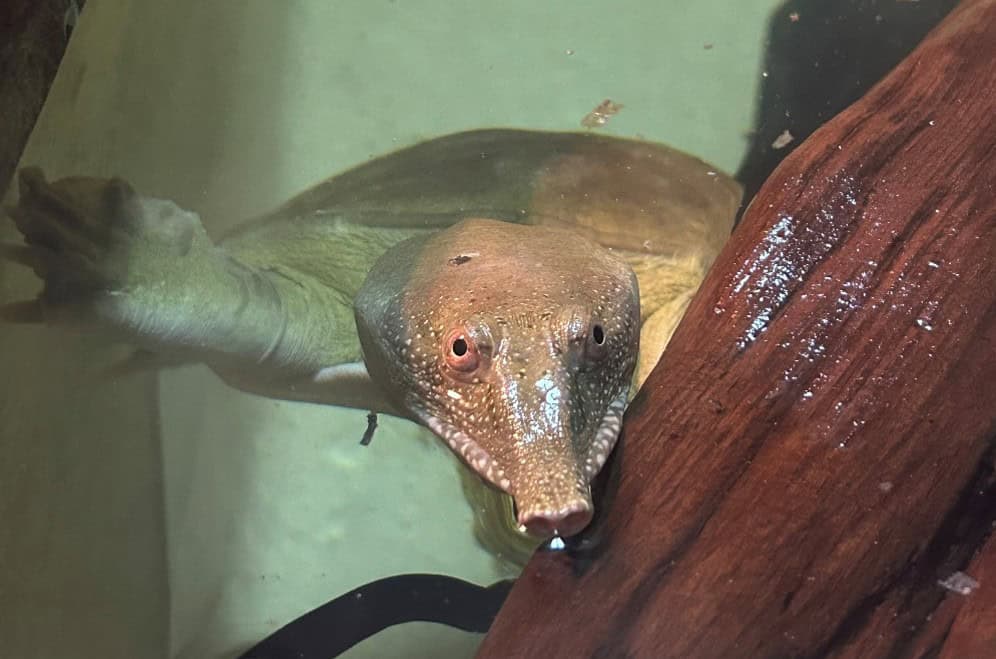
Next time you visit the park you’ll have to keep an eye out for our softshell turtle! She lives next to the royal pythons and can often be seen swimming in her water or hiding under her ramp!
By Beth, Deputy Head of Reptiles & Invertebrates