For the last reptile/invert blog of the year, I thought we could give a little highlight to probably one of the most popular snakes kept in captivity and as pets: the corn snake (Pantherophis guttatus).
With their inquisitive nature, relatively small size and the variety of colours available it is hardly a surprise that these snakes are a firm favourite.
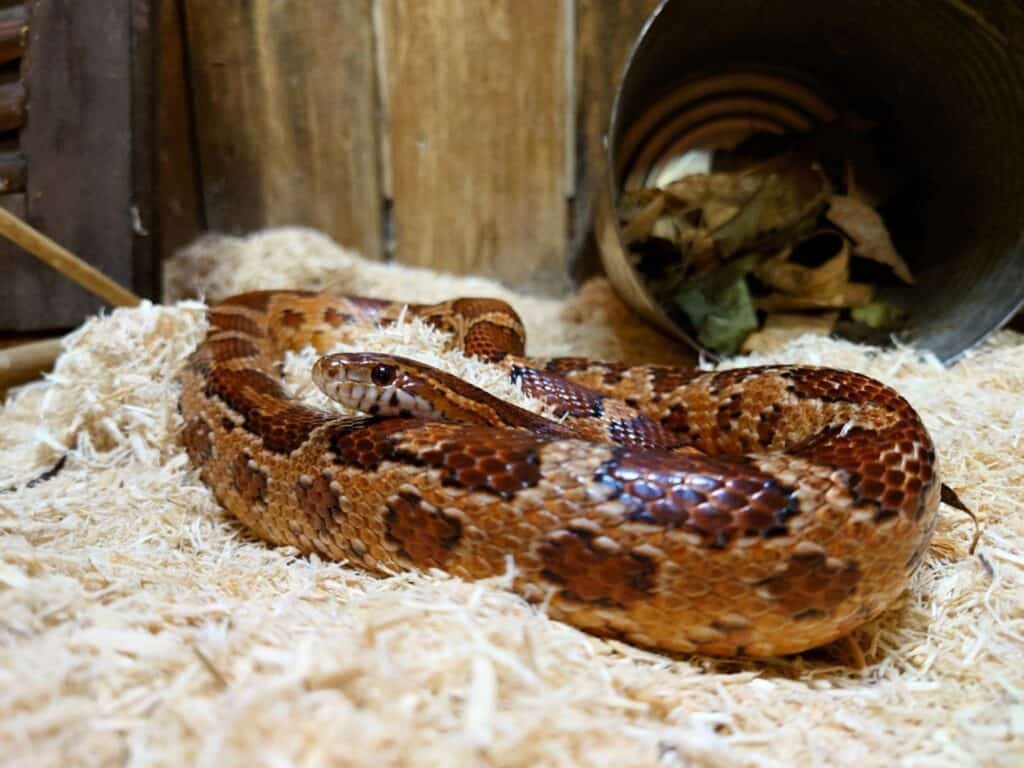
Corn snakes are also known as red rat snakes due to their striking red/orange colouration. The top of their bodies will be orange/red with darker red spots, called saddles, that go down the length of their spine. Their bellies are black and white and look a bit like a checkerboard.

However, because corn snakes are popular in captivity, people have managed to selectively breed these snakes to come in a wide variety of colours and patterns. These are called ‘morphs’. Each variation/morph has its own name, and there are over 800 of them to choose from.
I personally prefer wild-types (the red guys), but my first corn snake was a morph called anerythristic (pictured below). His name was Kuzco and I rehomed him from someone who no longer wanted him. You can see that instead of being beautifully red, he was light and dark grey.

Corn snakes originally come from southeastern USA and can be found in a variety of habitats, but will often prefer habitats such as woodlands, trees, overgrown fields and buildings like barns and sheds. Despite mostly being found on the ground, corn snakes are good climbers and can be found in higher spots too.

Corn snakes are part of the Colubridae family which includes two-thirds of all living snake species, over 2000 species, making it the largest snake family. Despite this, they only share their genus Pantherophis with 7 other species, all of which also live in the USA.
Corn snakes are constrictors, which means they squeeze their prey once captured before they eat it. It is commonly thought that constriction is used to suffocate prey, but more recent science has shown that it actually causes circulatory arrest. Constriction reduces the flow of blood around the body, stopping oxygenated blood from reaching all of the important organs, causing a quick death for the prey.
In the wild they will eat rodents, birds, bird eggs, amphibians and lizards, but in captivity they are predominantly offered rodents.
Earlier, I mentioned that these guys are relatively small in size, but these snakes can still grow to 3-6 feet in length on average. However, they have a slim build, so don’t feel that big in comparison to some of the other snakes that you will find here at Wingham.
In captivity, corn snakes can reach 15-20 years old, sometimes even older. In the wild they may not live as long due to predation, persecution and habitat destruction. Even though these snakes face some threats, they are classified as Least Concern on the IUCN Red List because their numbers are stable.
The popularity of the corn snake partly comes down to their generally chilled nature. Although, there are exceptions and some corn snakes can be on the feisty side. They are also fairly inquisitive and enjoy enrichment that smells of new things and they like to explore new areas when their enclosures have things moved around.
You will be able to find our corn snake in our reptile house. His name is Laker and he was found wandering around in a store/warehouse bathroom so was caught up and came to Wingham to have a more suitable home. His favourite spot to hide is tucked behind his wooden window shutter.

By Hannah, Head of Reptiles & Invertebrates