This week we’ve been celebrating Animal Enrichment Day! Caring for animals goes far beyond simply feeding, cleaning and housing them. Here at Wingham Wildlife Park, we’re big on enrichment and make sure our enclosures are as stimulating as we can. If you’ve not heard of enrichment before, this is a broad term for ways in which we give our animals a chance to explore, problem-solve and express their natural behaviours in ways that improve their overall well-being.
While enrichment benefits every species at the park, it plays a particularly fascinating role in the lives of birds; from the playful antics of parrots to the curious waddles of penguins. I’d like to take a closer look at how enrichment transforms the daily lives of some of the species we have on the bird section.
Animal enrichment refers to the intentional design of activities, objects or environments that stimulate an animal’s natural behaviour. You might spot some enrichment in our enclosures on your visit when we offer our animals toys or puzzles. But some enrichment isn’t so obvious as it can include sensory experiences, like new sounds or scents, social opportunities or physical activities that encourage movement and exploration.
For birds, enrichment is especially vital. In general, birds are intelligent, have keen senses and spend much of their day flying, foraging, communicating and exploring. Here at the park keepers, replicate these challenges through enrichment programs that engage the birds and are designed to challenge their minds and encourage foraging behaviours.
One of my favourite birds to enrich are our group of Humboldt penguins. There’s just something about penguins and whilst at first they might seem comical in their antics, they are actually highly social and inquisitive birds. In their natural environments, they spend their time swimming, diving and hunting for fish whilst foraging and during the breeding season, nesting in their colonies along the coastlines of Peru and Chile. Some of our most successful enrichment includes activities that mimic these natural challenges to keep penguins active and mentally sharp.

Bird keeper, Sam, blowing bubbles for the penguins.
Some of my favourites include floating toys or ice blocks that mimic the unpredictability of hunting and keep penguins motivated to dive and explore. You may have seen us hanging up a discoball, spraying water or blowing bubbles in the penguin enclosure. Penguins love to chase bubbles, a playful activity that encourages exercise and teamwork. A simple way to change their environment is to rearrange rocks and add new textures to their habitat that can spark curiosity and exploration. When we are not under bird flu restrictions, we give the penguins an opportunity to go for a walk in the morning where they can collect their own nesting material. This is just adorable to watch! During bird flu restrictions we provide alternative nesting material to fulfil their desire to make the best nest for their partners. Enriching our penguins is one of the best bits of my job and it’s a joy for visitors to watch as well!
Another species that’s really fun to enrich are our kookaburras! Famous for their laughing calls, kookaburras are a clever and observant species. As part of the kingfisher family, they are natural hunters that thrive on watching and reacting to movement. Enrichment for these birds focuses on stimulating their predatory instincts.
Our kookaburras are so clever and good at hunting that we often try to find ways of slowing down their feeding. Puzzle feeders and placing insects in slow-release feeders are some of my go-to enrichment sessions for our kookaburras, giving them plenty of opportunities to hunt throughout the day and spark their problem-solving skills. Changing up natural perches and hiding spots to provide different vantage points for hunting and observation also seem to be a hit.

Bird keeper, Felicity, giving Cookie the kookaburra a puzzle feeder.
Some of the birds on the section can be a little fussy with enrichment. Our wildfowl may appear easy-going, but they are highly social, resourceful and active birds. Their enrichment revolves around foraging, swimming and group dynamics. They absolutely love scattered leafy greens which encourage natural dabbling. Moving their logs around also provides lots of natural insects to forage on and adding new substrates to their enclosure to explore always goes down well.
All of our wildfowl are curious, but some more confident than others and some can be quite shy. Often the most rewarding enrichment for our birds is being with each other in a flock. Social interactions are really important to many bird species, but of course, we ensure they have regular novel experiences too!
One of the best enrichment activities we can do is training. Not only can the keepers spend some time with the birds and encourage them to partake in training for their favourite treats, but training has a huge benefit for their wellbeing as well. At the moment we are working on encouraging our more cautious birds to come to a station at feed times to build trust so that we can give them a good close-up visual check. Once they have built up their confidence, we then work with them to voluntarily step on scales. These cooperative behaviours help us keep an eye on their condition without having to catch them up for a vet check.
When it comes to enrichment, few birds rival the intelligence and curiosity of parrots. Known for their vibrant colours and remarkable ability to mimic sounds, parrots are among the most cognitively complex creatures on the planet. Many of our parrots are rescues and where in the past they have not had a very stimulating environment, some became bored or stressed, leading to unwanted behaviours such as feather plucking.
With our parrots, effective enrichment includes foraging puzzles and toys that we can hide their food in. The parrots are challenging to outsmart! They are so clever that once they have worked out a puzzle, it doesn’t take them long to figure out next time that enrichment is offered because they remember what they did last time! Compartments that must be opened or twisted are excellent at stimulating their minds and hiding their food in different places can be fun (if they aren’t watching where you’re hiding it!).
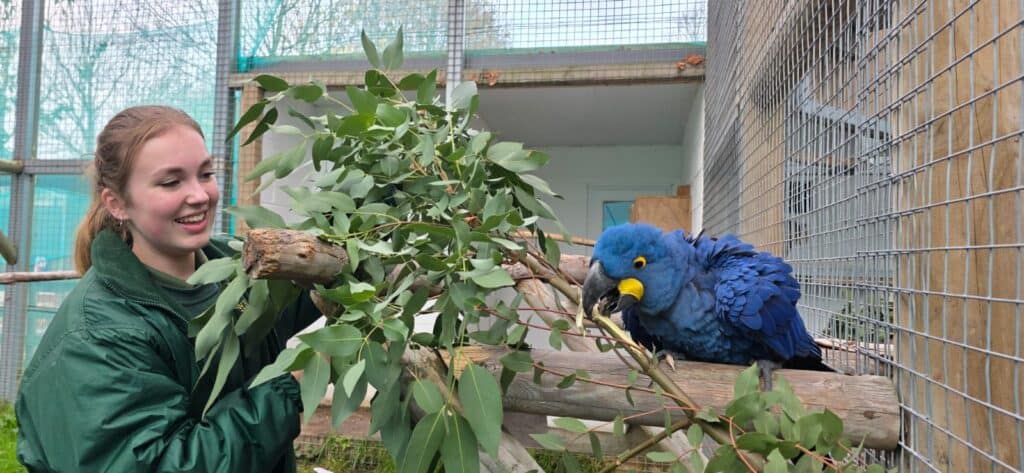
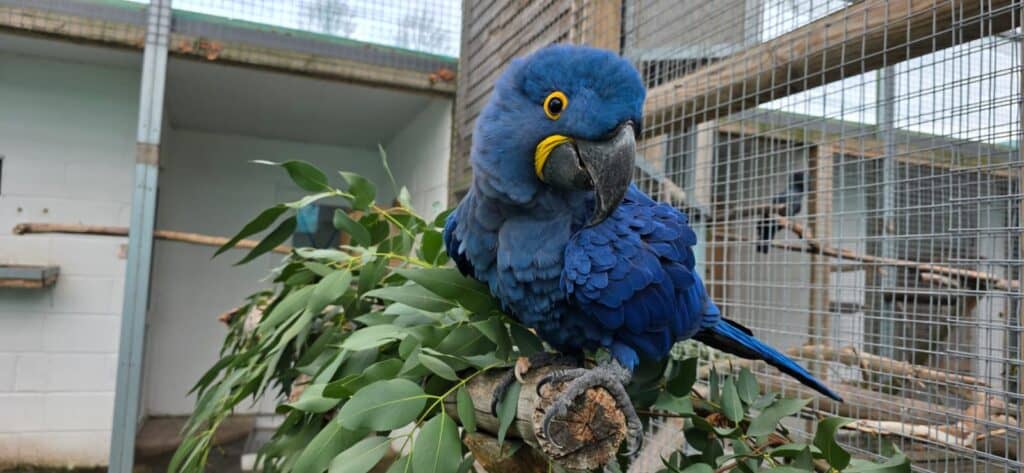
Birds keeper, Lily, giving browse to our hyacinth macaws.
Parrots also love to chew! Safe wood, cardboard and natural fibres let them shred and explore so one of the best enrichment activities we can offer the birds is hanging browse such as branches of eucalyptus for them to chew. Again, social interaction is super important to parrots. Many of them also seek us keepers out when we are working in the aviaries. A few love it when we sing to them and some are very good at mimicry. Interaction with caregivers and the other parrots engage their social side and they are such quick learners that most of the parrots get very excited when they see us coming in with the weighing scales!
Why Enrichment Matters for All Birds
As you can see, enrichment isn’t just entertainment for our animals, it’s a cornerstone of animal welfare. Birds that engage in natural behaviours tend to be healthier, more active and less prone to stress. It strengthens their muscles, hones their instincts and deepens the bond between animals and caretakers. For visitors, Animal Enrichment Day offers an opportunity to learn about the creativity and care that goes into modern animal management.