One of my favourite things about being a zookeeper is the fact that everyday is a school day. In this industry, welfare and care standards for our animals are improving every day so there is always something new to learn about. All of these improvements come from research carried out on different species, whether that is in the wild or in captivity.
Research is a key element in the mission of modern zoos and aquariums.
Here at the park we divide research up into two areas; one being to ensure that the health and welfare of our animals is the highest priority and secondly, to understand behaviour that cannot be studied out in the wild. We have been involved in a number of different research projects over the years and continue to carry out research in house for a number of different species. At Wingham Wildlife Park we also use a system called ZIMS which provides structure needed to record, manage and analyzes animal data in a consistent and reliable way while enabling responsible data sharing between organisations.
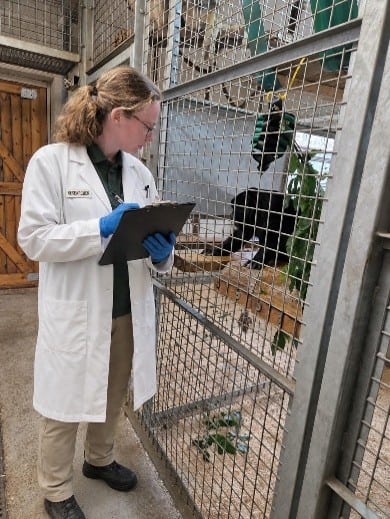
Modern zoos and aquariums offer scientists opportunities for research to be carried out, that cannot be undertaken effectively in the wild, on the biology of the plants and animals they care for.
There are a huge variety of topics that can be studied in the zoo industry including: welfare, conservation education, behaviour and training, nutrition, reproduction and genetics, sustainability as well as veterinary care.
Health and Welfare Research
By understanding individual animals it can help us understand why some populations are more successful than others. When considering the improvement of welfare and refinement of veterinary care it can help conservationists provide better care for rescued or sick animals. On the primate section, we are currently researching a number of our diets to see if there are weight fluctuations seasonally when we change their diets.
Education and Engagement
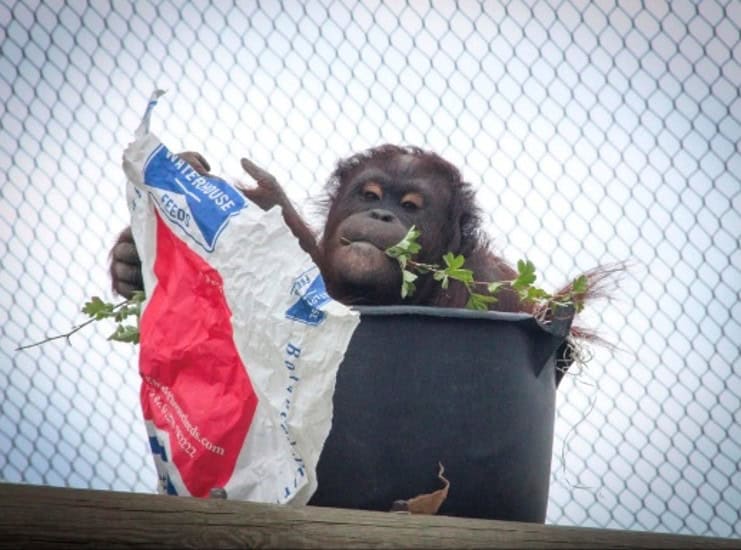
Not all research in zoos and aquariums involves the animals or plants in our care. We also look at how visitors learn and interact with nature as well as the presentation of information and its effectiveness.
Species Research
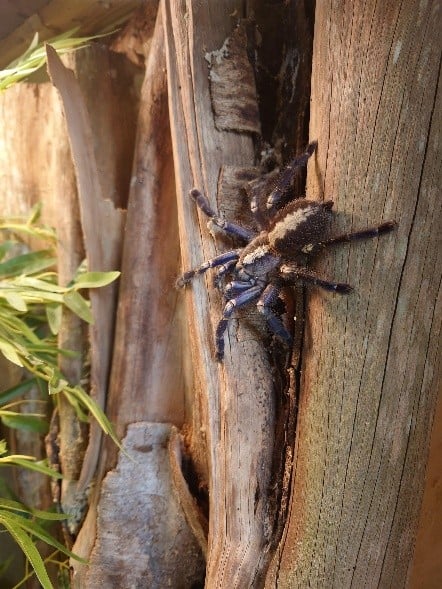
Understanding population requirements helps to create more suitable living conditions in both zoos and aquariums as well as in the wild and protected areas. Research can involve studying genetics to help assist with conservation success and population dynamics. Currently we have an ongoing study about the distribution and population of the Gooty sapphire ornamental tarantula.
Habitat and Systems Research
Habitat destruction and fragmentation is a highly influential factor on so many different species population decline. Wildlife contributes and benefits from the systems the habitat provides. Where the fragile balance of ecosystems is disrupted by human activity, by the arrival of an invasive new species or another factor, the challenges for both animals and people can become extremely difficult.
Research is such a crucial part of the zoo world now and it helps in so many different ways to improve the lives of the animals in our care!
By Holly, Head of Primates

No Comments
Be the first to start a conversation