Have you ever wondered: “Why do Big Cats sleep so much?” – During your visit here at Wingham wildlife park you may be wondering why some of your favorite animals spend so much time asleep, in this blog we are going to break down the facts and delve deep into the many biological advantages some of our animals gain just by simply sleeping.
As a member of team carnivores, it may not surprise you that a variety of animals on our section can be seen sleeping for a very large portion of our working day. In fact, species such as the lion and tiger have been documented sleeping for an average of sixteen to twenty hours each day, that leaves them with only four to eight hours of time per day that they are awake and active. Its no wonder we question “Why do Big Cats sleep so much?” – For those of you with your own domestic cats at home, I’m sure these sleeping patterns will sound very familiar as even small cats can sleep for a whopping twelve to eighteen hours a day.
Although this may have given carnivores, especially cats, a reputation for being lazy, there is an extremely important reason for this behaviour and it dates back through thousands of years of hunting and survival.
Several factors contribute to this behaviour, but one of the biggest reasons for this is all to do with how carnivores preserve energy, as they need to use short bursts of energy less frequently. It is not uncommon in the wild for cats to go several days without eating, as hunting every day would exhaust them quickly and not every hunt is successful, in fact some of the larger species of cat that are famously known for being natures top predators, sometimes have an extremely low success rate when it comes to hunting. Tigers for example, an incredibly powerful animal and the largest species of all of the cats, is only successful at catching prey between five to ten percent of hunts.
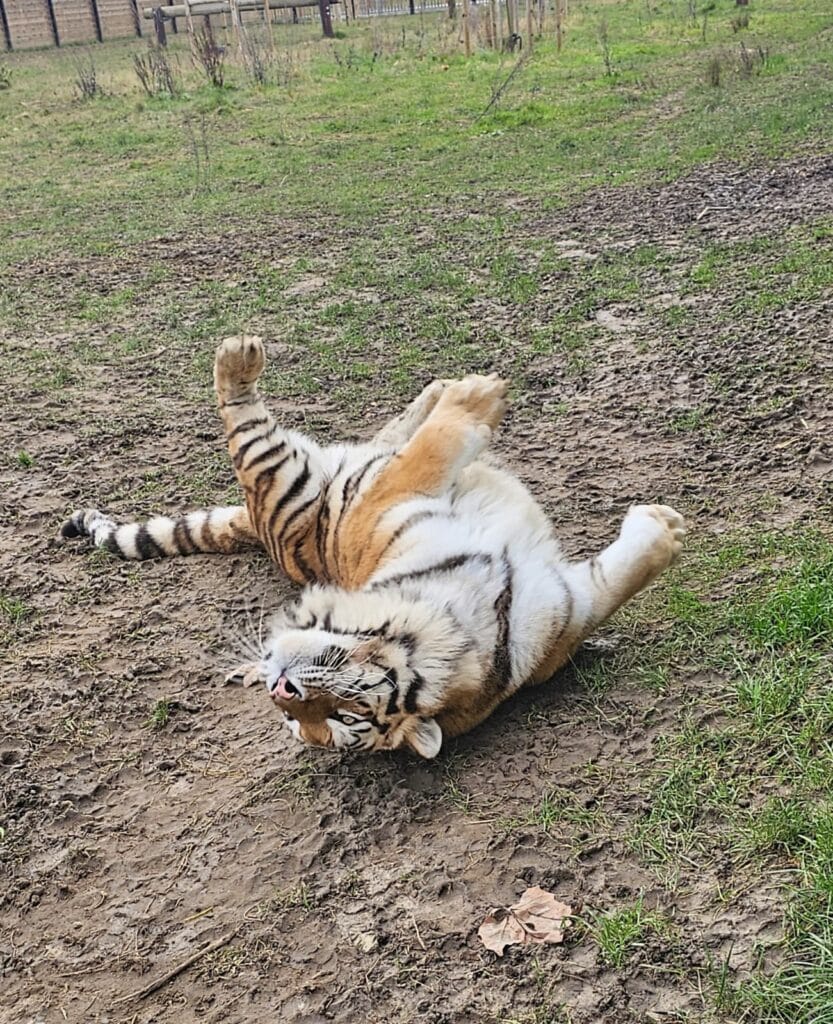
The time spent between each hunt mainly consists of sleeping. This means that when carnivores do hunt, they are able to exert extremely high amounts of energy in a very short period of time, as they never know when they will next cross paths with their prey. These hunts are extremely strenuous and predators rely heavily on having lots of stored up energy to be able to undergo the task of taking down prey animals that are often faster than themselves, making sleep a superpower for many carnivores.
All five species of big cat are designed to consume very large quantities of meat in a single sitting due to how infrequently they catch prey. So, another reason for their sleep patterns is actually to do with digestion. Digestion can take several days for a large carnivore to complete and due to their ability to not only consume large amounts of flesh but also consume other parts of their prey such as bone, fur and cartilage, something as simple as digesting a meal requires lots of energy. Meaning that they need to rest just to simply digest!
Lots of carnivore species sit at the top of the food chain, meaning that in the wild their survival wouldn’t be threatened by other species, making it safe for them to sleep for long hours without the risk of predation. This can be compared directly with prey species which typically have very short sleeping cycles to avoid the vulnerability that comes with being asleep.
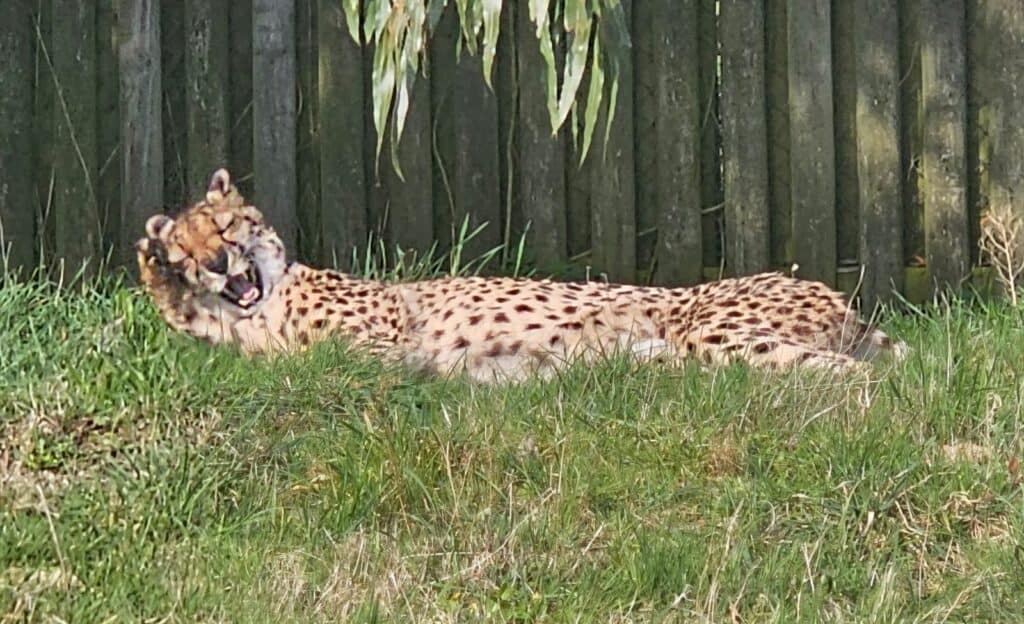
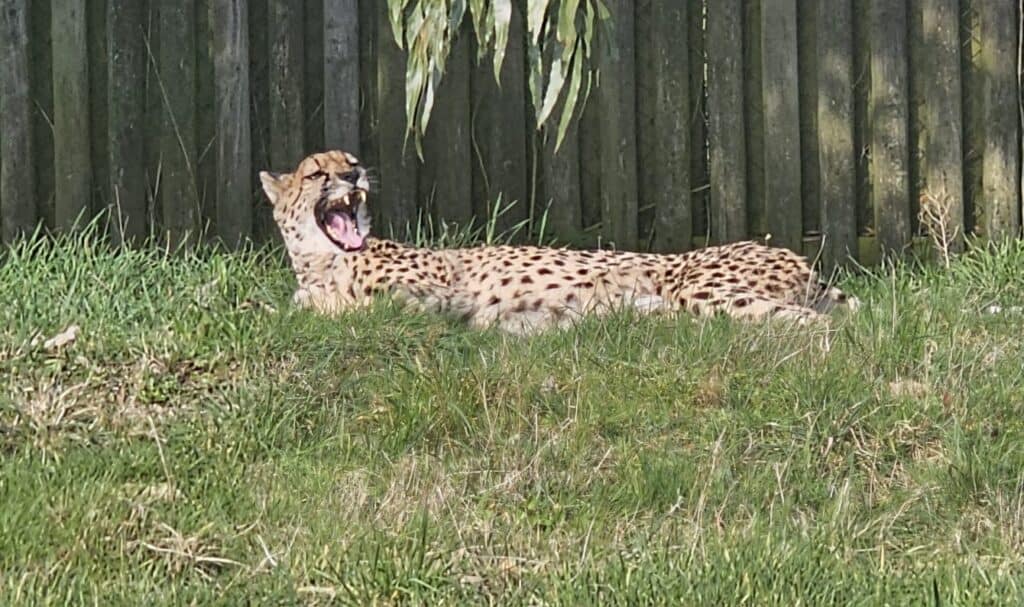
Lastly, lots of species of carnivore are ambush predators, meaning that hunting in the dark gives them an advantage as it makes it much easier for them to sneak up on their prey, this can sometimes give the illusion that big cats and other large carnivores are extremely lazy, when in reality their most active hours are often during the night or during dusk and dawn making them mostly crepuscular by nature.
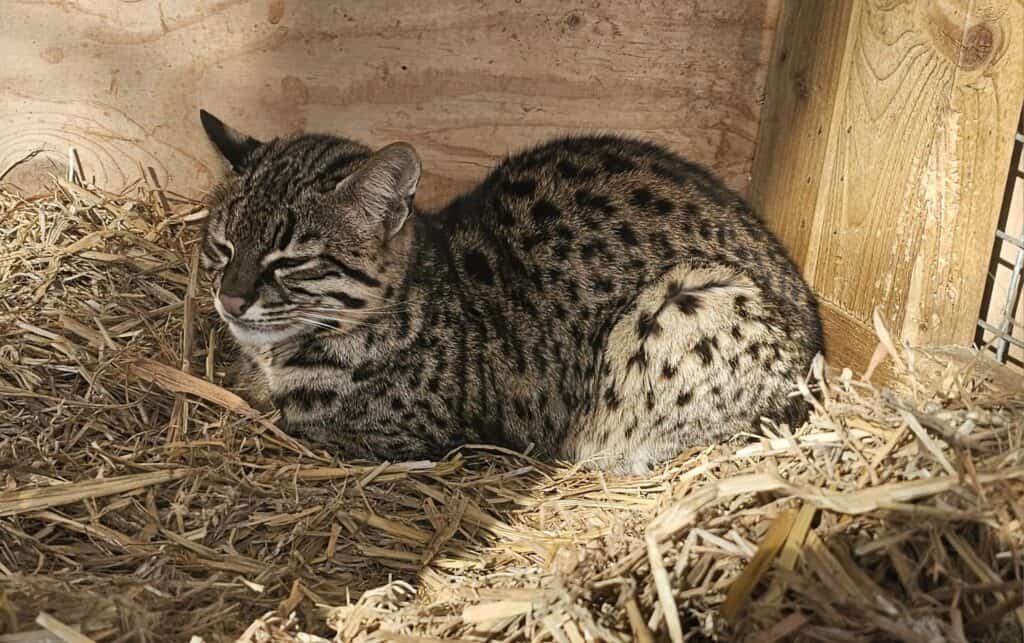
During your next visit, whether it be our resident lion, Clarence, basking in the sun or Lonan, our Geoffroy’s cat, sprawled out asleep in his straw and you wonder “Why do Big Cats sleep so much?” , you are not witnessing laziness, but an incredibly important behaviour that is ingrained within the instincts of hundreds of species of carnivore. If you ask me, the science behind the snooze certainly points to your favourite carnivores being incredibly legendary rather than lazy.
By Rebecca, Deputy Head of Carnivores