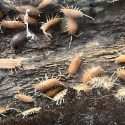
Variable Isopod Natural History
Size
The variable Isopod can grow up to 15mm.
Habitat and Distribution
This species inhabits crevices in forests and rocky outcrops.
Diet
They feed on leaves and decaying wood.
Groups and Breeding
The female will carry her fertilised eggs (numbering in the several hundreds) in a pouch under her abdomen called a marsupium which she keeps moist until the babies hatch, at which time they leave her straight away. She may have 1 or 2 lots of eggs in the summer.
Threats
This species is rarely caught for the pet trade and faces few other natural issues.
Interesting Facts
As their name suggests, they have varied colours from orange to grey.
The Variable Isopod During Your Day Out in Kent
Our Variable Isopods can be seen in the Bug Gardens alongside a wide variety of other species such as Tarantulas, Scorpions, White Clawed Crayfish and many more.