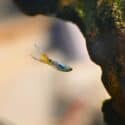
Guppy Fish
Size
They can grow between 1.5 – 4cm. The males are often smaller than the females. They weigh less than 1 gram.
Habitat and Distribution
In the wild, they inhabit varied ecosystems including marshes, canals, and coastal lagoons. Guppies are native to northeastern South America, specifically Venezuela, Guyana, Suriname, Brazil, and Trinidad & Tobago. Due to intentional introduction for mosquito control and the aquarium trade, they are now found worldwide in tropical and subtropical regions across all continents except Antarctica.
Age
They can live between 2 – 3 years.
Diet
In the wild, guppies are opportunistic omnivores that feed primarily on algae, diatoms, detritus, and aquatic insect larvae, as well as small invertebrates and plant fragments.
Groups and Breeding
Guppies are highly social, active, and peaceful freshwater fish that thrive in groups of three or more, though six or more is ideal to reduce stress and prevent bullying. They often form hierarchical structures, with dominant males displaying vibrant colors to establish territory, while also engaging in complex social interactions, including mating dances and chasing behaviors. Guppies breed rapidly in the wild, often becoming invasive by multiplying in streams and rivers where they were introduced. They are livebearers with no parental care; females mate via a gonopodium and can store sperm for up to 6 months to produce multiple, consecutive broods of 20–50+ fry, usually every 30 days.
Threats
This species is listed as Least Concern by the IUCN. In the wild, particularly in their native habitats, guppy fish face several, mostly biological and environmental, threats. Despite being highly adaptive and invasive elsewhere, they are a primary food source for larger aquatic creatures within their natural ecosystem.
Interesting Facts
Each male guppy has a unique color pattern, similar to a human fingerprint.
The Guppy Fish During Your Day Out in Kent
The Guppy Fish can be found in our Reptile House. Their tanks are just in the window of the Reptile Kitchen. They share this home with a number of other reptiles and amphibians including White’s Tree Frogs, Spectacled Caimans and various Snakes.