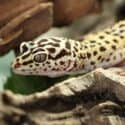
West Indian Leopard Gecko
Size
They can be 8 to 10 inches (20 to 25 cm) from head to tail. They typically weigh between 45g and 65g. Males are usually slightly larger and can reach up to 80g to 100g,
Habitat and Distribution
The West Indian leopard gecko naturally inhabits the dry, rocky, scrublands and forested hill tracts of western India, specifically in the states of Gujarat, Maharashtra, and northern Karnataka. Unlike common leopard geckos, they thrive in environments with higher humidity (around 70%–80%) and hide in boulder crevices or under loose tree bark.
Age
They live 10 to 20 years in captivity with proper care, and some have even exceeded 27 years.
Diet
Leopard geckos (including the West Indian morph) are strict insectivores. Their daily diet requires live insects, completely avoiding fruits or vegetables.
Groups and Breeding
They are strictly solitary animals. They are ready to breed at about 1.5 to 2 years of age (weighing 45g+). The process requires a simulated winter cooling period, specific courtship rituals, and precise temperature-dependent incubation for the eggs.
Threats
This species is listed as Least Concern by the IUCN, however they still face threats, primarily environmental and human-driven threats in the wild. Because they are natively found in the forested hills and scrublands of Western India, their primary dangers include, Habitat Loss & Degradation, Human Exploitation, Superstitions and Traditional Medicine, Natural Predation and Climate & Weather Fluctuations.
Interesting Facts
The West Indian leopard gecko is a distinct subspecies of leopard gecko found in the forested hills and scrublands of western India. Unlike common desert geckos, they have a heavy, dark, net-like pattern on their heads and require slightly higher humidity levels.
During Your Day Out in Kent
Here at the park, we have three West Indian Leopard Geckos. They can be seen in our reptile house, alongside other reptiles and amphibians.