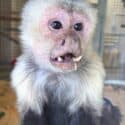
White-throated Capuchin Natural History
Size
These are medium sized monkeys weighing between 2-4kg with males being heavier than females and reaching heights of 71cm.
Habitat and Distribution
These capuchins are native to Central America and areas of northern South America. They prefer tropical evergreens with high humidity and drained lowlands.
Age
On average they have much longer lives in captivity than in the wild. Wild capuchins can live up to 30 years but 15-25 year is a much more common range for them while those in captivity can reach 55 years with an average age ranging between 35-45 years.
Diet
These primates are opportunistic omnivores feeding on fruits, nuts, vegetation, insects, small mammals, birds and reptiles.
Groups and Breeding
These are very sociable monkeys preferring to live in mixed groups. Females tend to stay with the group they are born into while males leave around age four to form new social groups.
Females become sexually mature at 4-5 years and can give birth every two years following successful breeding with a male. Higher ranking males within the hierarchy have more opportunities for mating. The gestation is between 160-180 days with females carrying, feeding and protecting the young.
Threats
White-throated capuchins are listed as Vulnerable on the IUCN Red-list. They are threatened in the wild due to a number of factors including hunting for the pet trade and for food. They are also considered pests in many populated areas and thus, hunted to protect crops. Degradation and deforestation of their natural habitat also poses a threat.
Interesting Facts
White-throated capuchins are considered to be amongst the most intelligent species of New World monkeys (native to Central and South America). They can even create tools to help with foraging and as weapons against threats such as snakes.
The White-throated Capuchins During Your Day Out in Kent
The White Throated Capuchins at Wingham Wildlife Park can be seen in the Rainforest SOS area. They have lots of neighbours, consisting of other primate species including Bornean Orangutans, Black and White Colobus Monkeys and Black Howler Monkeys.
We are home to three individuals who joined us in May 2026.